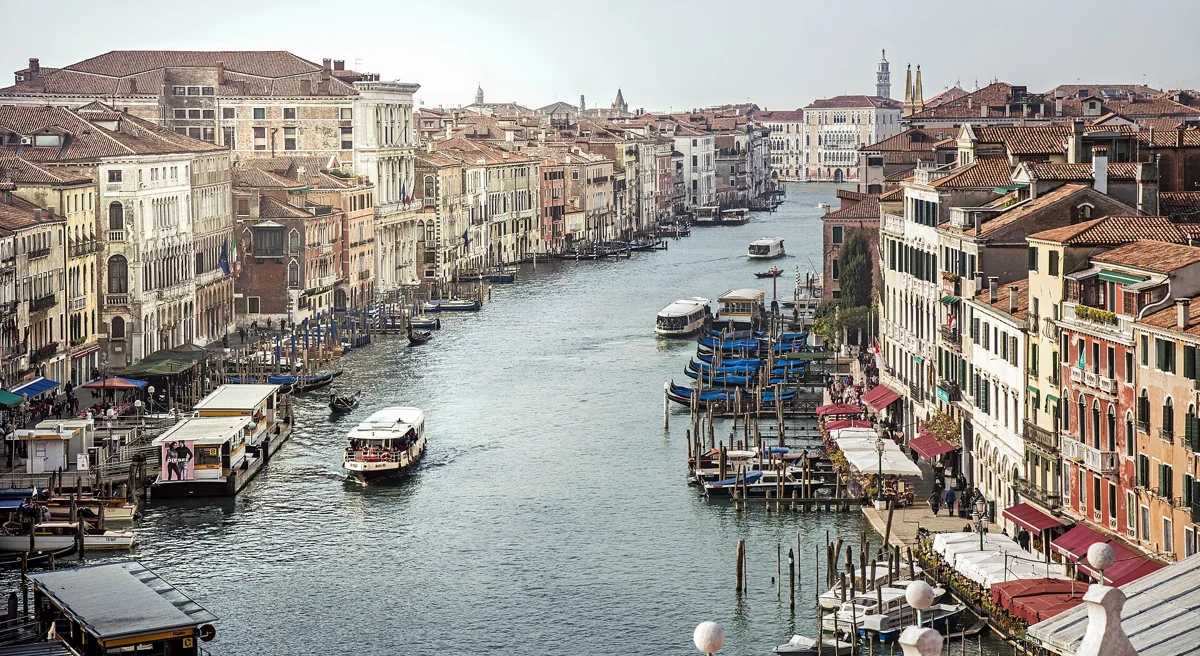
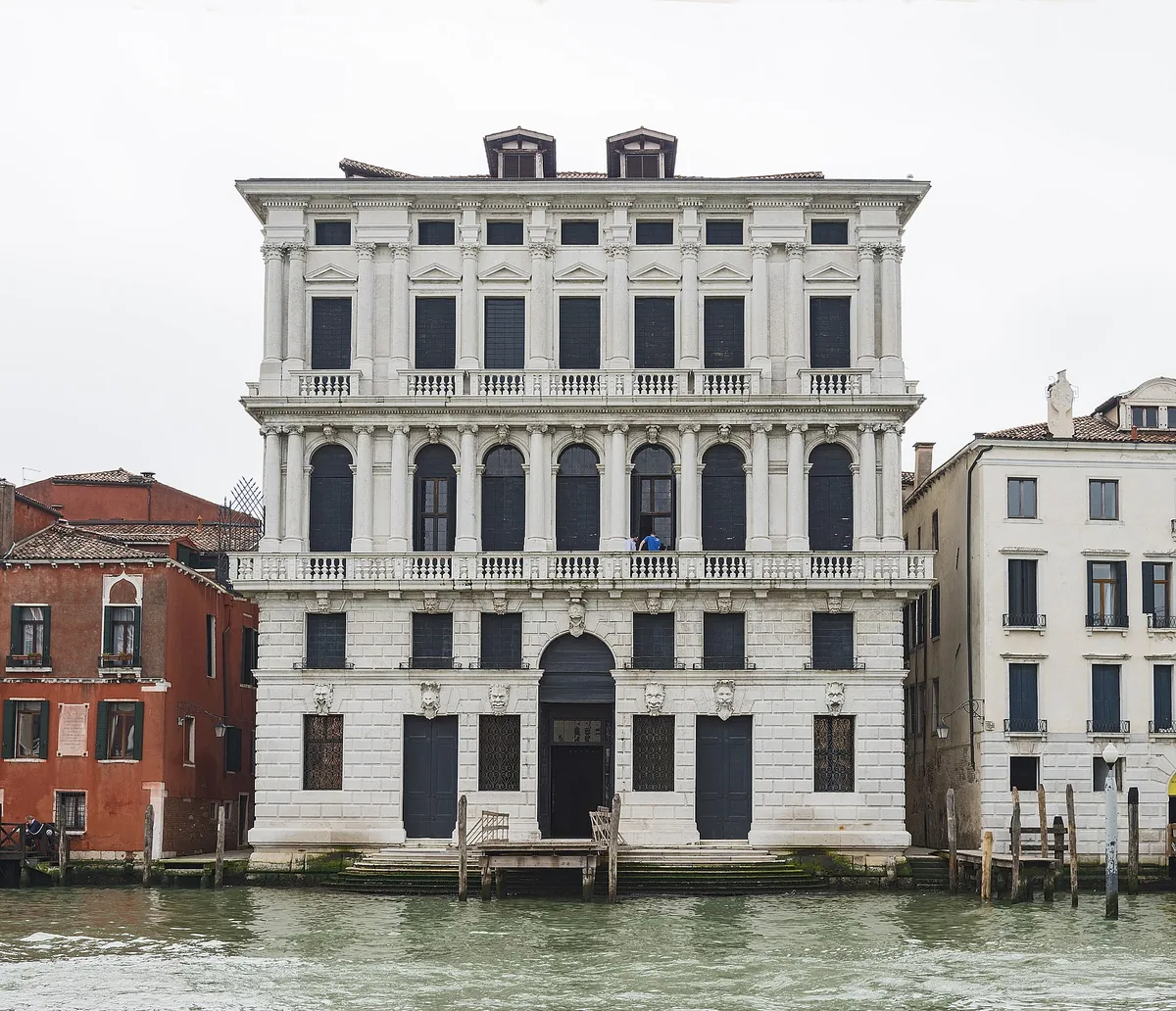
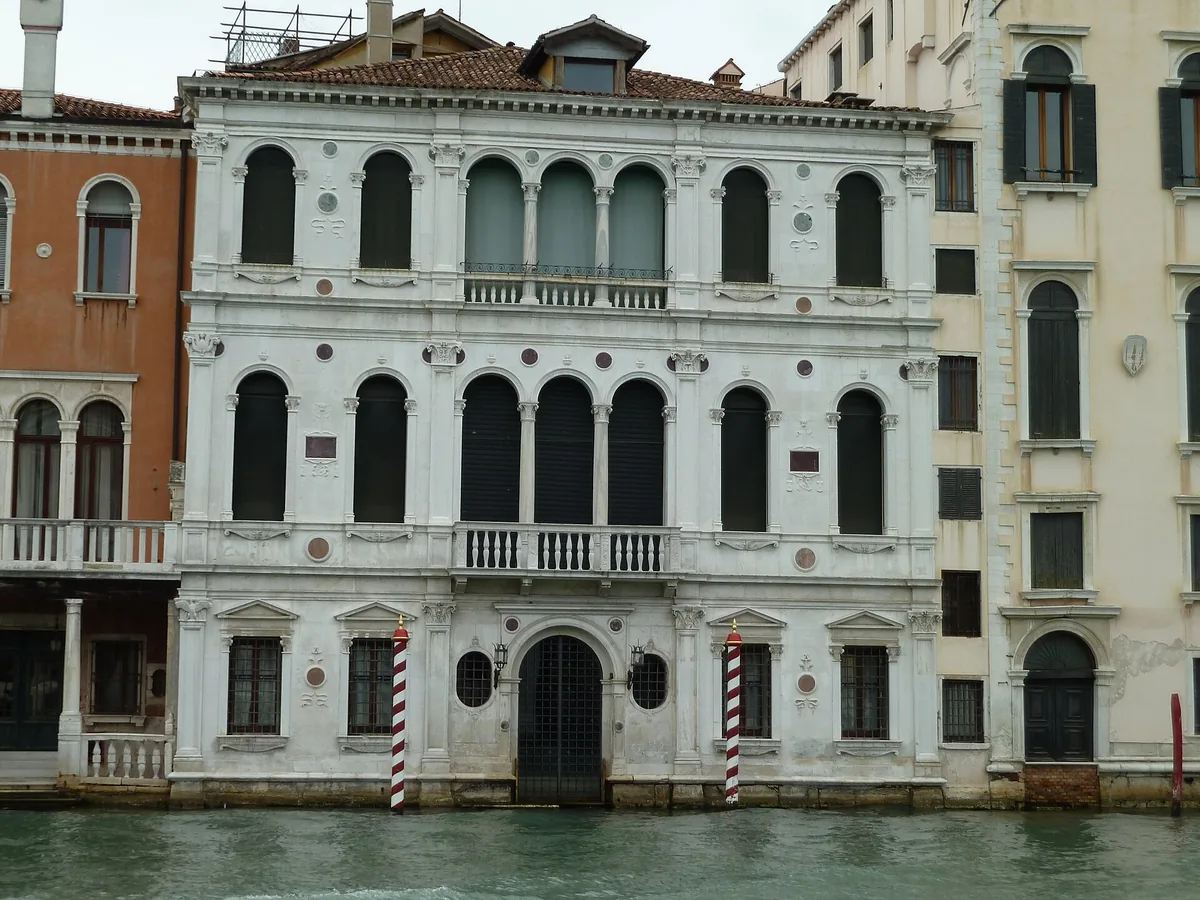
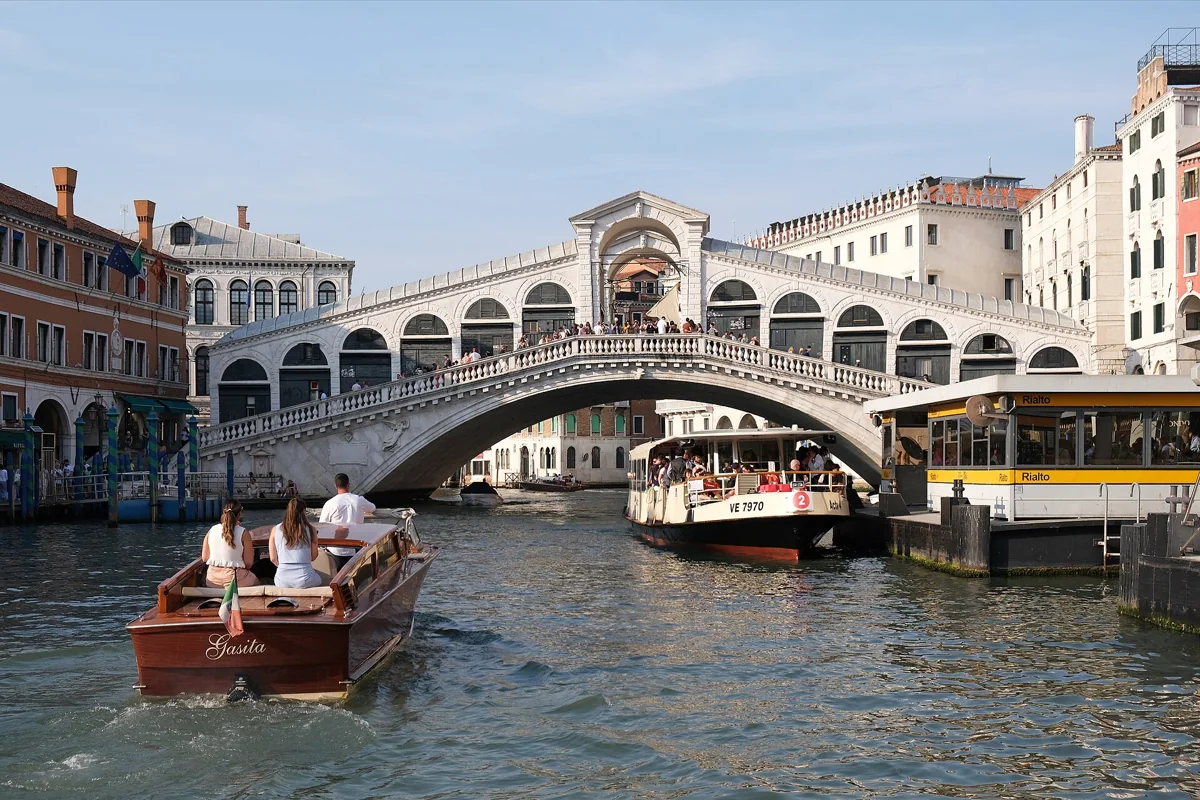
The Grand Canal is the city’s principal stage and one of its essential transport routes. Palaces present their finest façades to the water, while boats carry residents, goods and visitors through a constantly changing panorama.
A boat journey helps explain why so many Venetian buildings seem to turn their backs on the streets. Their formal entrances and most ambitious architecture face the canal. Gothic tracery, Renaissance symmetry and Baroque weight appear in succession.
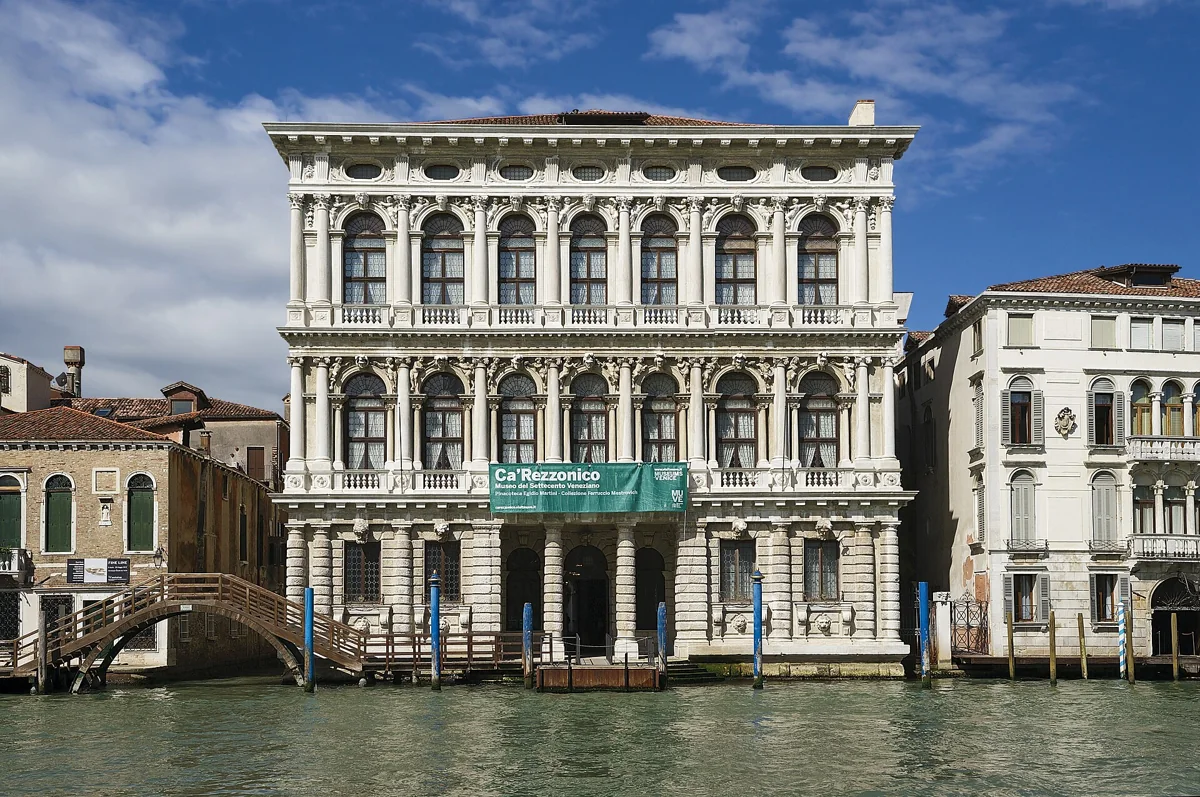
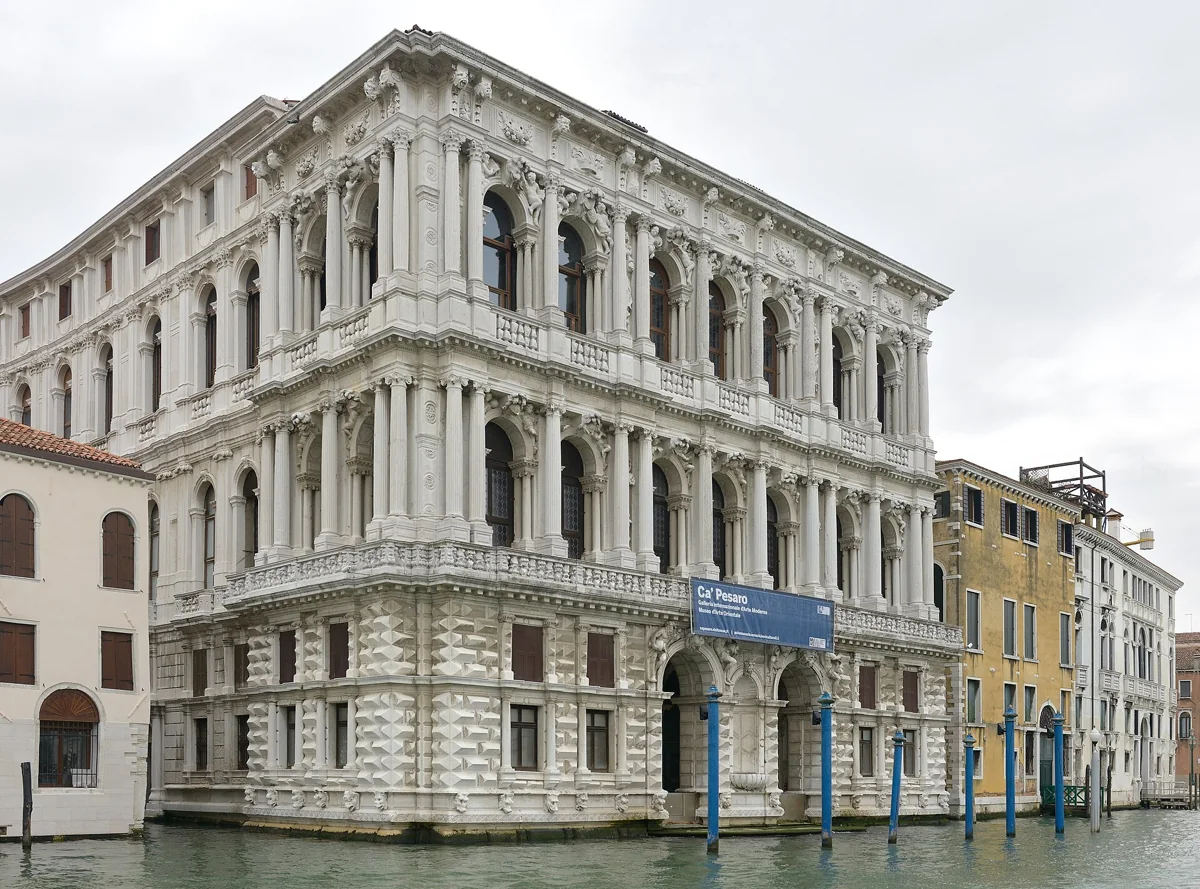
Look for Ca’ d’Oro, Ca’ Pesaro and Ca’ Rezzonico as different expressions of palace architecture. Near the basin, the domes of the Salute become the culminating landmark.
Choose your way to experience it
A public waterbus is a practical way to see a long section of the canal. Check the current route and direction; services differ in stopping pattern. Keep doors and luggage areas clear and remember that you are sharing public transport with people making everyday journeys.
A gondola ride is a different experience, often combining smaller canals with a section of the Grand Canal. A private water taxi is a transport service with its own pricing. Decide whether your priority is sightseeing, atmosphere or simply reaching an address.
Views from land
The Rialto Bridge and Accademia Bridge offer famous perspectives. Smaller canal-side spaces can be quieter, but there is no continuous pedestrian promenade along both banks. Be prepared for streets that end at water and routes that turn inland.
Do not enter private hotel terraces or boat landings simply because they offer a good view. Public viewpoints are plentiful when you explore patiently.
A useful first-day experience
Consider a Grand Canal journey early in your stay. It gives you a mental picture of the city’s shape before you explore the lanes. Then return on foot to a palace or district that caught your attention.
Travel at a time when you can enjoy the view without rushing to a connection. Keep your ticket validated according to the operator’s rules and allow space for other passengers to board and leave.
Before you go
Questions & answers
Can I walk continuously beside the Grand Canal?+
No. Much of the waterfront is occupied by buildings and private access points; walking routes repeatedly turn inland.
Is a vaporetto the same as a gondola?+
No. A vaporetto is a public waterbus; a gondola ride is a separate experience with different arrangements.
Check current opening times, prices, access and service notices with the relevant operator before travelling. Suggested visit lengths and routes are planning estimates.
Official reference for opening hours and access notices
The Grand Canal is a sequence of façades, family histories and urban change. We tell the stories that can be documented through archival, museum, university and institutional sources; the collection continues to grow.
On the Rio di San Vio, Ca’ Dario stands out for its Renaissance façade in polychrome marble and its position at the entrance to the Grand Canal. Its name is linked to Giovanni Dario, a Venetian diplomat from Candia: the State Archive preserves his wills and identifies his home with the palace at San Vio. These records offer a grounded way into the building’s history, distinct from legends that arose much later.
Facing the entrance to the Grand Canal and the San Marco Basin, Ca’ Giustinian is now home to the Venice Biennale. The institution dates the palace to around 1471 and describes it as the joining of residences belonging to the Giustinian and Badoer-Tiepolo families. Restoration in 2008–09 adapted the interiors for contemporary use. Today it houses Biennale offices and cultural spaces; the interiors can be visited by request, according to the institution.
Facing the Grand Canal opposite the Salute, Palazzo Pisani Gritti took its present Gothic form in 1475, when the Pisani family transformed it. In 1525 it became the private residence of Doge Andrea Gritti; later centuries brought other noble families. In the nineteenth century John Ruskin stayed here with Effie and wrote “The Stones of Venice”. Today it is The Gritti Palace, a hotel since 1895.
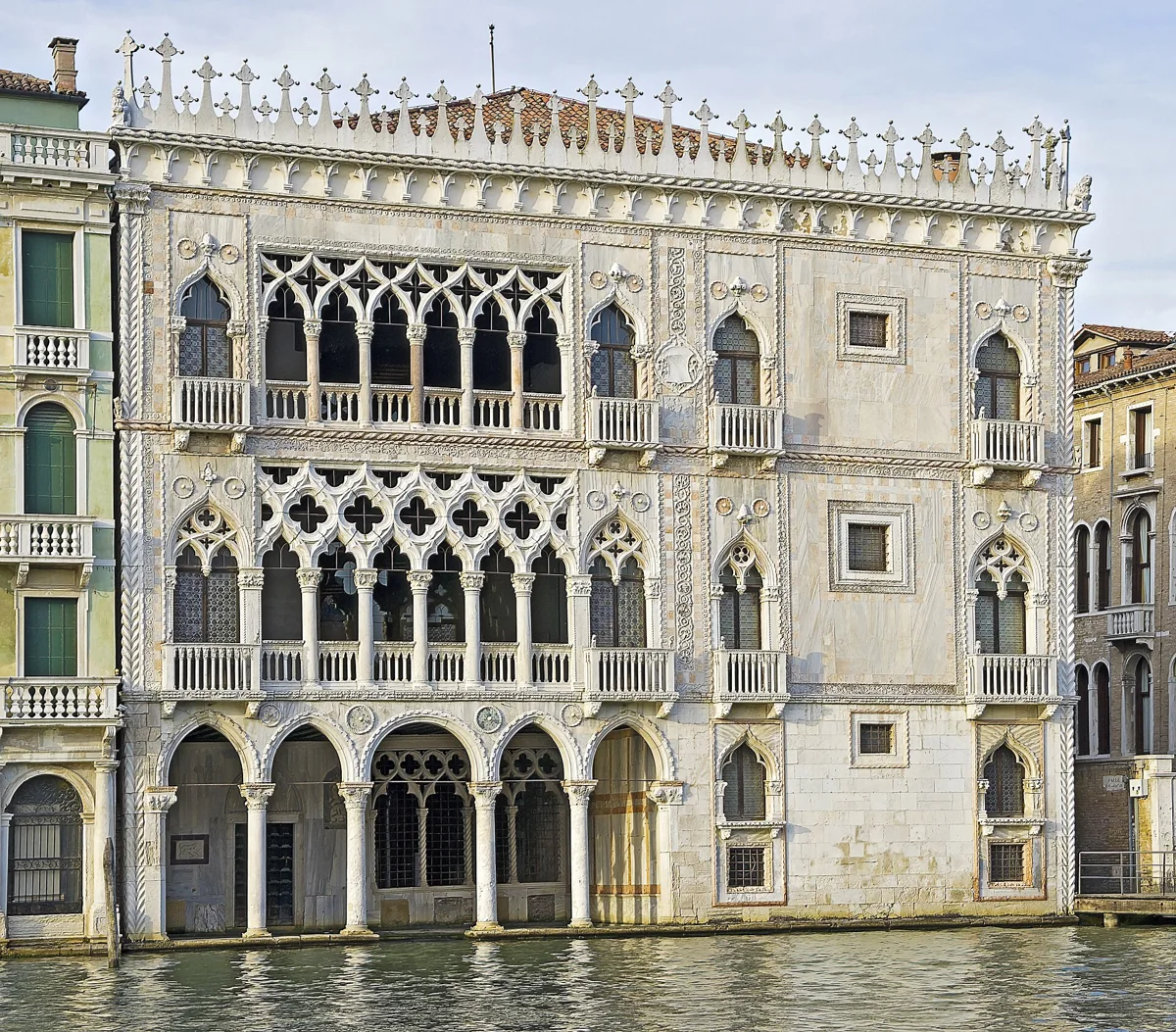
Known as the “House of Gold” for its once richly decorated façade, Ca’ d’Oro is one of Venice’s best-known late-Gothic palaces. Baron Giorgio Franchetti bought and restored the building, then donated the palace and his collection to the Italian State in 1916. The marble mosaic in the courtyard and Bartolomeo Bon’s 1427 wellhead make the building itself part of the museum story.
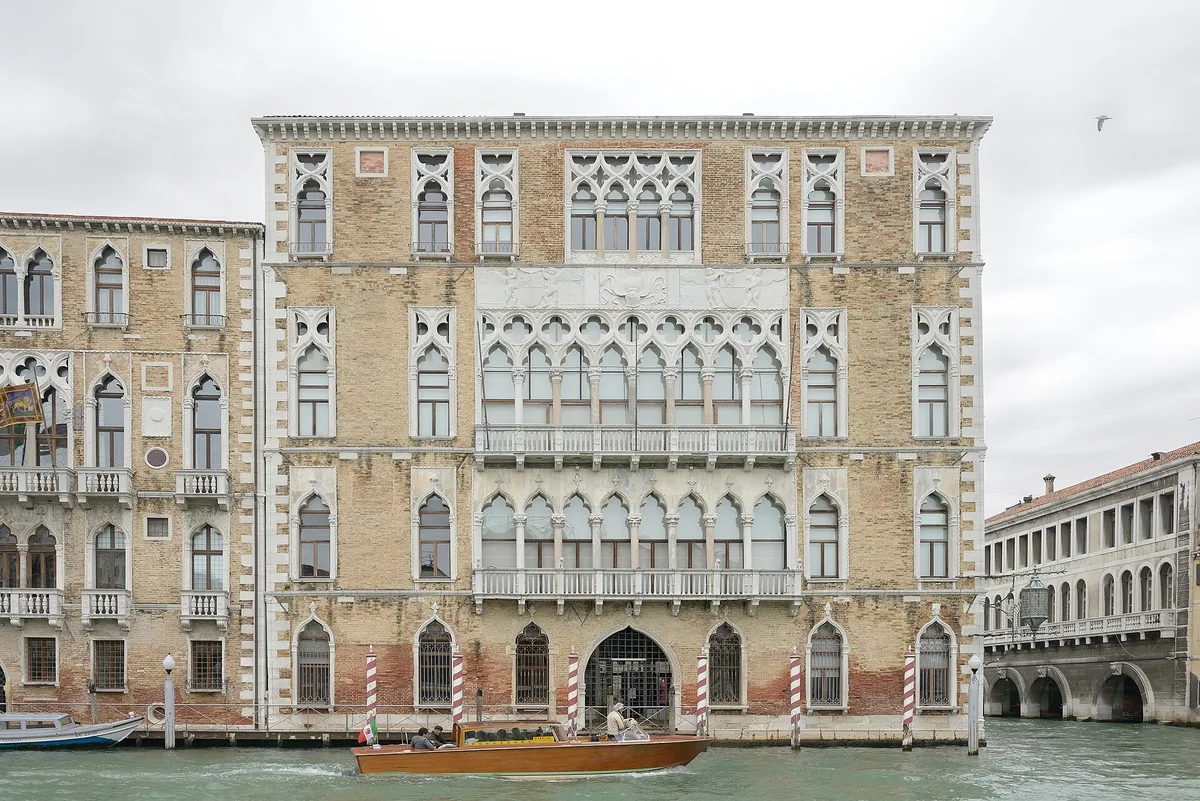
The Doge Francesco Foscari built this Gothic residence in 1453, after the earlier House of the Two Towers was demolished. Its position on the widest bend of the Grand Canal made it a stage for public life: Henry III of France and Poland was hosted here in 1574. Since 1868, the palace has been the historic home of Ca’ Foscari University.
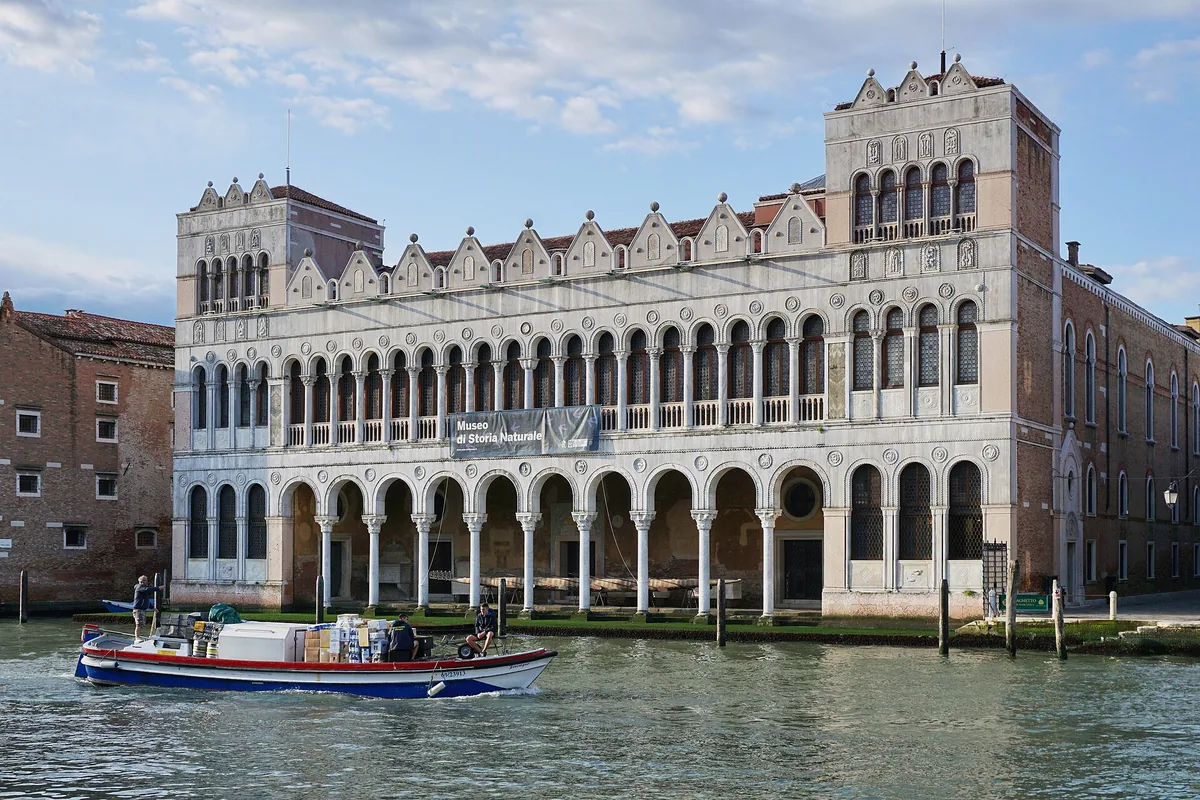
Built for the Pesaro family in the thirteenth century, the Fontego dei Turchi began as a Venetian house-fondaco: a residence and trading place tied to commerce with the East. From 1621 it served as the city’s fondaco for Turkish merchants. After major nineteenth-century restoration, it became home to Venice’s Natural History Museum in 1923.
Baldassare Longhena began Ca’ Rezzonico for the Bon family in the seventeenth century, but financial difficulties left the grand project unfinished. Giambattista Rezzonico acquired it in 1750 and asked Giorgio Massari to complete it. The result became a setting for the family’s rapid rise; today the palace tells the story of eighteenth-century Venetian life through rooms, furnishings and art.
Commissioned by the wealthy Pesaro family, Ca’ Pesaro was designed by Longhena from 1659. The architect died before the palace was complete; Gian Antonio Gaspari carried the project forward, finishing it in 1710. Its monumental Baroque façade now frames the International Gallery of Modern Art, while the palace’s later civic life grew from Duchess Felicita Bevilacqua La Masa’s donation to Venice.
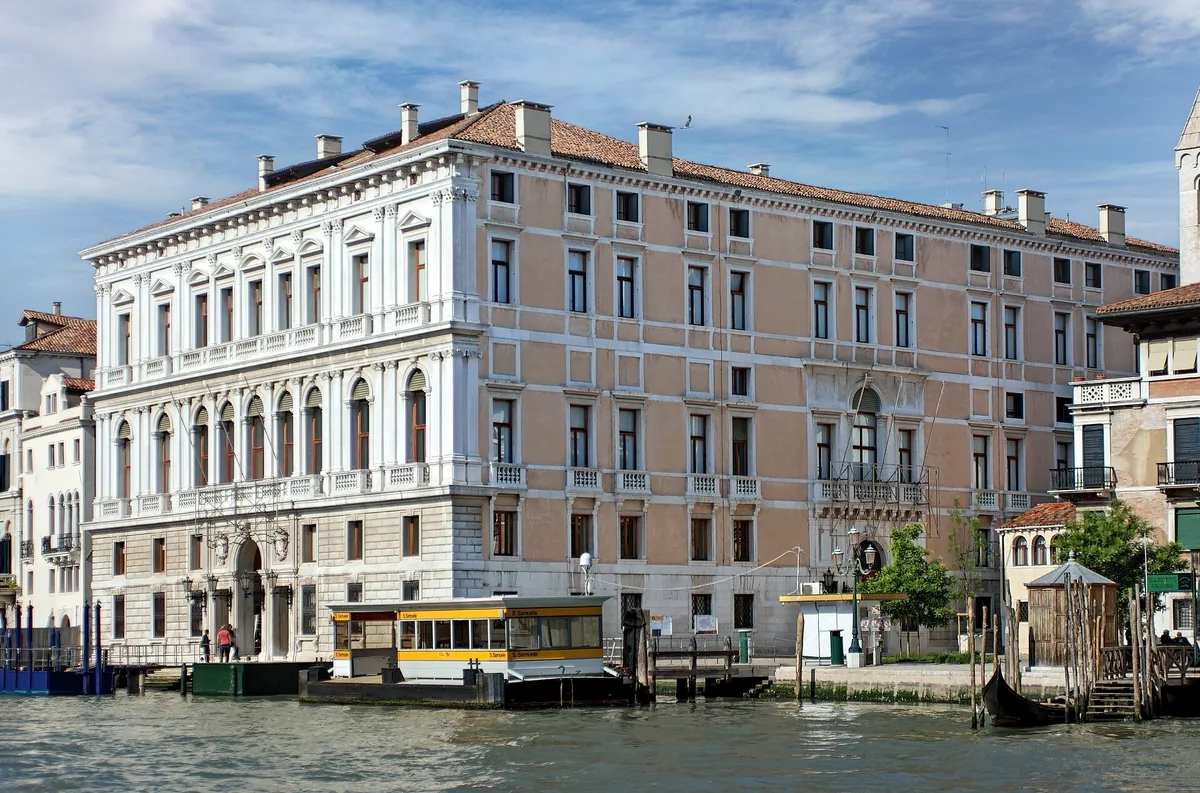
Commissioned by the Grassi family and designed by Giorgio Massari, Palazzo Grassi rose between 1748 and 1772. It is often described by its present custodians as the last noble residence built on the Grand Canal before the Republic fell. The building later changed owners and uses; Tadao Ando’s 2005–06 restoration adapted its historic rooms for contemporary art exhibitions.
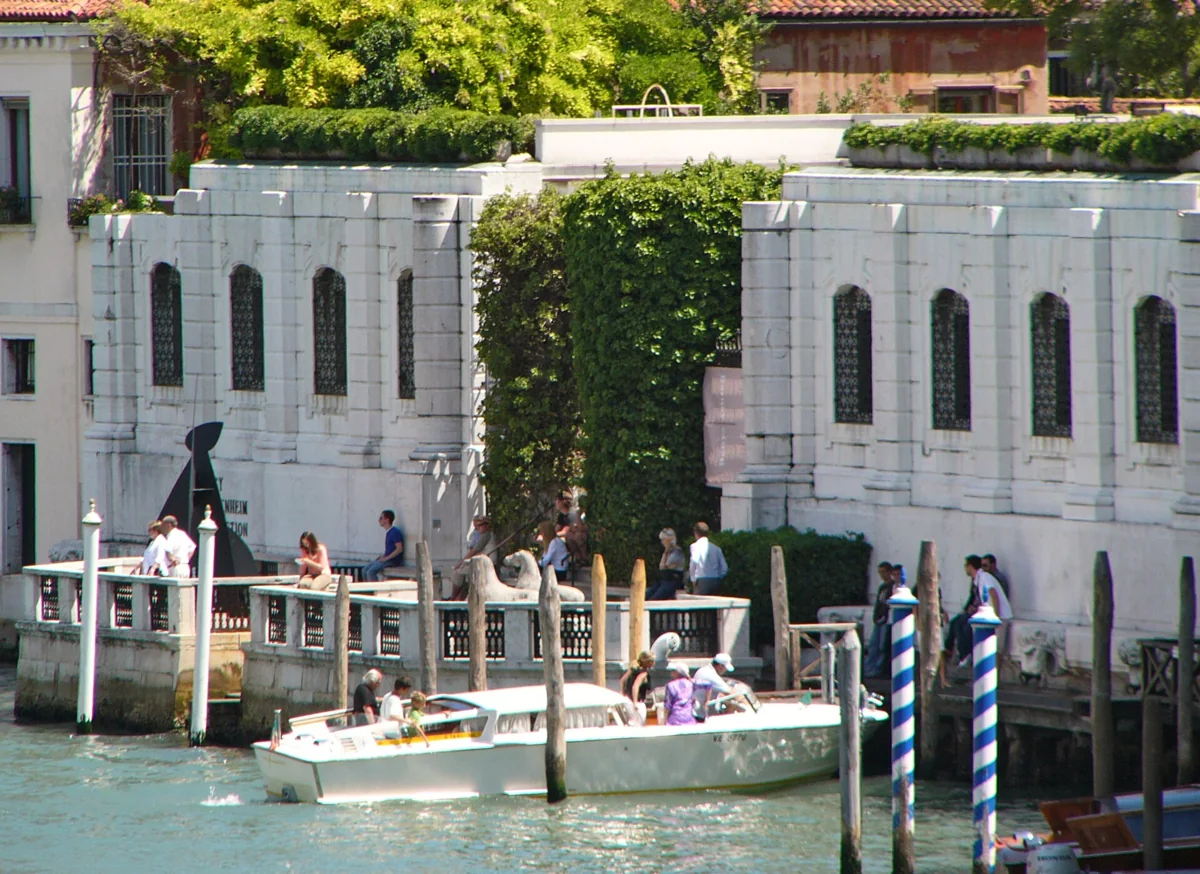
This low, broad palace is a pause in the Grand Canal’s more vertical procession. The Venier family commissioned Lorenzo Boschetti in 1749 to design a five-storey residence, but only the first level was built. Peggy Guggenheim bought the palace and garden in 1949 and made them her home; the collection she assembled is now displayed here.
Built between 1723 and 1728 to a design by Domenico Rossi for the Corner family of San Cassiano, this Santa Croce palace takes its name from Caterina Corner, Queen of Cyprus. It later served as Venice’s Monte di Pietà from 1834 to 1969 and has housed Fondazione Prada’s Venice venue since 2011.
A house-fondaco stood here by 1365. The Vendramin family acquired it in 1449; work on the canal-side façade began around 1500 and gave the building its early Renaissance appearance. Through inheritance and marriage it passed to the Grimani family in the sixteenth century. Today the Fondazione dell’Albero d’Oro presents research into the palace, its collections and its inhabitants.
Designed by Mauro Codussi around the turn of the sixteenth century, Ca’ Vendramin Calergi is one of the Grand Canal’s major Renaissance palaces. It was associated over time with patrician families and doges; Richard Wagner stayed here during his final visit to Venice in 1883. Since 1959 it has housed the historic venue of the Venice Casino. Today the palace connects its residential past with the public and cultural life of the Casino and Wagner Museum.
Facing the Grand Canal near Ca’ d’Oro, Ca’ Sagredo retains the layered character of a Venetian patrician residence. The Sagredo family acquired the palace in the seventeenth century; one of its members, Gianfrancesco Sagredo, was a friend of Galileo and, according to the hotel’s official history, the scientist was a guest in its rooms. The building is now a hotel: this present use may allow access to historic interiors, but it is not the same as a museum with unrestricted entry. Check visitor arrangements in advance.
Ca’ Farsetti dates back to the twelfth or thirteenth century. According to the City of Venice guide, it was built by the Dandolo family and passed to the Farsetti in 1669. In the eighteenth century, Abbot Filippo Vincenzo Farsetti opened an academy of sculpture and a collection of casts that attracted young artists, including the young Canova. After serving as a hotel for a period, the palace was purchased by the municipality in 1826. Today it is one of the city’s institutional seats, together with nearby Ca’ Loredan.
Together with nearby Ca’ Farsetti, Ca’ Loredan is a rare example of a Veneto-Byzantine casa-fondaco, combining home and trading premises. The City of Venice guide dates its construction to the late twelfth or early thirteenth century: the ground-floor portico and upper loggia reflect the building’s original arrangement. It was altered and enlarged over the centuries before entering municipal ownership in the nineteenth century. Today it hosts City of Venice institutional activities; access to the interiors depends on public openings and scheduled events.
The story of Palazzo Cavalli Franchetti begins with the Marcello family, who owned a large house here on the Grand Canal in the early sixteenth century. The building later passed to the Gussoni and Cavalli families. After nineteenth-century transformations, Baron Raimondo Franchetti bought it in 1878; Camillo Boito oversaw major works, including the monumental staircase built between 1881 and 1884. Since 1999 the palace has been associated with Venezia Iniziative Culturali and hosts exhibitions, meetings and events. Check the programme for public access.
Palazzo Balbi stands on a bend of the Grand Canal. Commissioned by Nicolò Balbi, construction began in 1582, probably to a design by Alessandro Vittoria. Its façade marks a transition from Classicism to Baroque; since 1971 the building has housed the Veneto Regional Government.
Ca’ Tron faces the Grand Canal and has a small Italian-style garden behind it. Its origins may reach back to the Gothic period, while its overall form took shape in the late sixteenth century; Andrea Tron added two wings. Since 1972 it has been a home of Iuav University, which restored the building.
Not to be confused with Ca’ Corner della Regina, this San Marco palace is the historic seat of the Metropolitan City of Venice. It was rebuilt in its present form after the 1532 fire, to a design by Jacopo Sansovino for the Corner family. Today the complex also houses representative offices and, in part, the Prefecture.
The ground-floor columns give this monumental Grand Canal palace its name. It belonged to prominent Venetian patrician families, and its more recent history reflects twentieth-century politics: it was known as Ca’ Littoria from 1935 to 1945, then Ca’ Matteotti until 1954. Since 2009 it has housed the Ministry of Culture’s regional secretariat for Veneto.
Palazzo Ferro Fini grew from the joining of several historic buildings on the Grand Canal. In the nineteenth century it became the Grand Hotel de Venise, welcoming distinguished guests; in 1975 the Veneto Region acquired it and made it the seat of its Regional Council. Its rooms preserve traces of both the noble residence and the hotel era.
In Cannaregio, Ca’ da Mosto brings a Veneto-Byzantine façade to the Grand Canal, recalling Venice’s mercantile past. The city tourism record dates the building to the thirteenth century and notes that from the sixteenth to the eighteenth century it housed the Albergo del Leon Bianco, one of the historic inns on the waterway.
Between Rialto and Ca’ Foscari, Palazzo Pisani Moretta combines a Flowering Gothic façade with interiors reshaped over the centuries. The palace’s official history dates its construction to the second half of the fifteenth century and traces the works that gave it its present appearance between the sixteenth and eighteenth centuries. Venetian artists including Tiepolo and Guarana contributed to its Baroque rooms.
At San Vio, Palazzo Contarini Polignac is recognised by its marble façade and coloured roundels. Dating to the late fifteenth century, its architecture blends Gothic and Renaissance elements. The design has been attributed to several architects rather than settled definitively; historical architectural sources place the Contarini dal Zaffo family’s acquisition in the second half of the sixteenth century.
Facing the Grand Canal near the Accademia Bridge, the Palazzi Barbaro complex brings together two buildings from different periods. The architectural record describes a fifteenth-century Gothic section and a Baroque enlargement attributed to Antonio Gaspari. Seen together, they show how a Venetian residence could change over time while keeping its direct relationship with the water.
In the San Marco district, Palazzo Dolfin Manin brings Jacopo Sansovino’s Renaissance language to the Grand Canal. The Veneto Cultural Heritage Catalogue dates its construction from 1536 and attributes the design to Sansovino; it also records an eighteenth-century reconstruction by Giannantonio Selva. The façade remains a visible trace of these changes.
Between Rialto and San Samuele, Ca’ Corner Spinelli marks an important transition from Venetian Gothic to the Renaissance. The architectural history consulted places its construction for the Landò family around 1480–1490; in 1542 it passed to Giovanni Corner, who commissioned works by Michele Sanmicheli and Giorgio Vasari. Its marble façade and coloured roundels make it a distinctive sight from the water.
Italy’s national cultural heritage catalogue dates Ca’ Mocenigo Vecchia from the 14th century to the early 17th. Its Grand Canal façade was rebuilt in the 17th century, before 1625: two piano nobili, Serlian windows and a central balcony shape its rhythm. The catalogue identifies it as private property, so the palace is best viewed from the water; visitors should not assume interior access.
In Dorsoduro, between Ca’ Rezzonico and Ca’ Foscari, Palazzo Nani Bernardo was commissioned by the Bernardo family in the mid-16th century and designed by Alessandro Vittoria, according to the residence’s official history. Its pale marble Renaissance façade retains traces of earlier decoration; the Italian-style garden was created in the 18th century. This is a private residence, not a museum with general public admission.
In the San Marco district, the Veneto architectural heritage catalogue attributes Palazzo Contarini delle Figure to Antonio Abbondi, known as lo Scarpagnino. The same record notes a significant episode in its history: in 1713 the last Contarini heir bequeathed furnishings and artworks to the Doge’s Palace. The Grand Canal façade can therefore be read alongside the story of the family collection.
Around the middle of the fifteenth century, Marco Corner commissioned Bartolomeo Bon to design an ambitious residence on the Grand Canal. In 1461 the site passed to Francesco Sforza, giving the palace its name. The project was never completed; its diamond-point rustication and massive corner column hint at the intended scale. The Grand Canal catalogue records that Titian had a studio here in 1513.
The Veneto regional architecture catalogue dates Palazzo Belloni Battagia to around 1650 and attributes its design to Baldassarre Longhena. The Baroque façade is also recognised by its two obelisk-shaped roof finials. The regional record lists it as privately owned, so its story can be read from the canal and public space without assuming access to the interior.
The Veneto regional catalogue dates Palazzo Flangini to 1661–1682 and attributes its design to Giuseppe Sardi. Facing the Grand Canal near San Geremia, its Baroque façade stands out for its height and the sculpted details around its arches. The catalogue provides a documented starting point for reading this stretch of Cannaregio.
After the fire of 1505, the Fondaco dei Tedeschi was rebuilt beside Rialto between 1506 and 1508. The City of Venice describes a five-storey building with more than two hundred rooms for German merchants, combining lodging, storage and commercial activity. Its history shows how the Republic organised and regulated foreign trade along the Grand Canal.