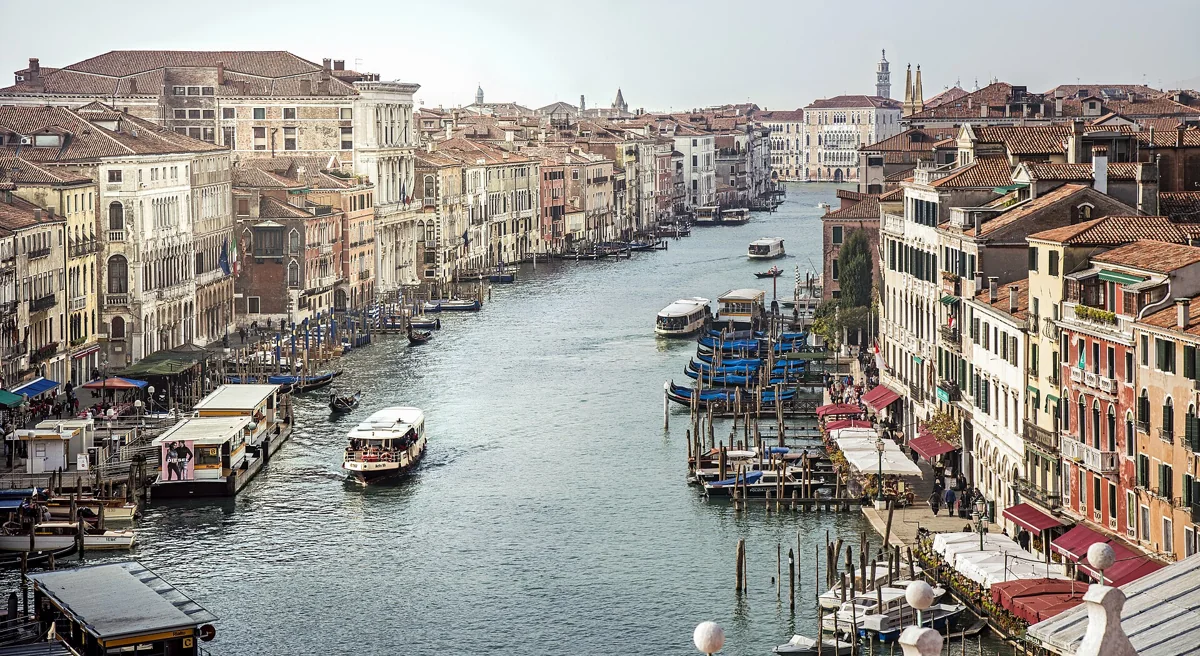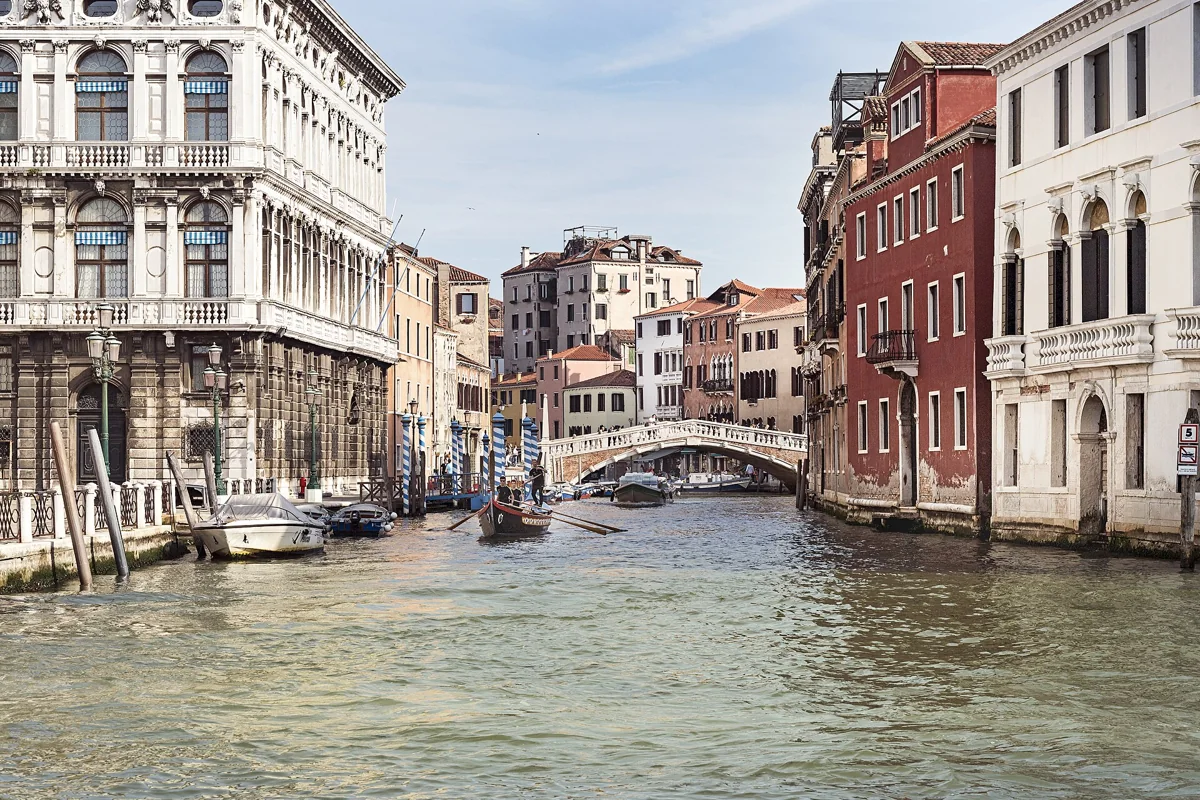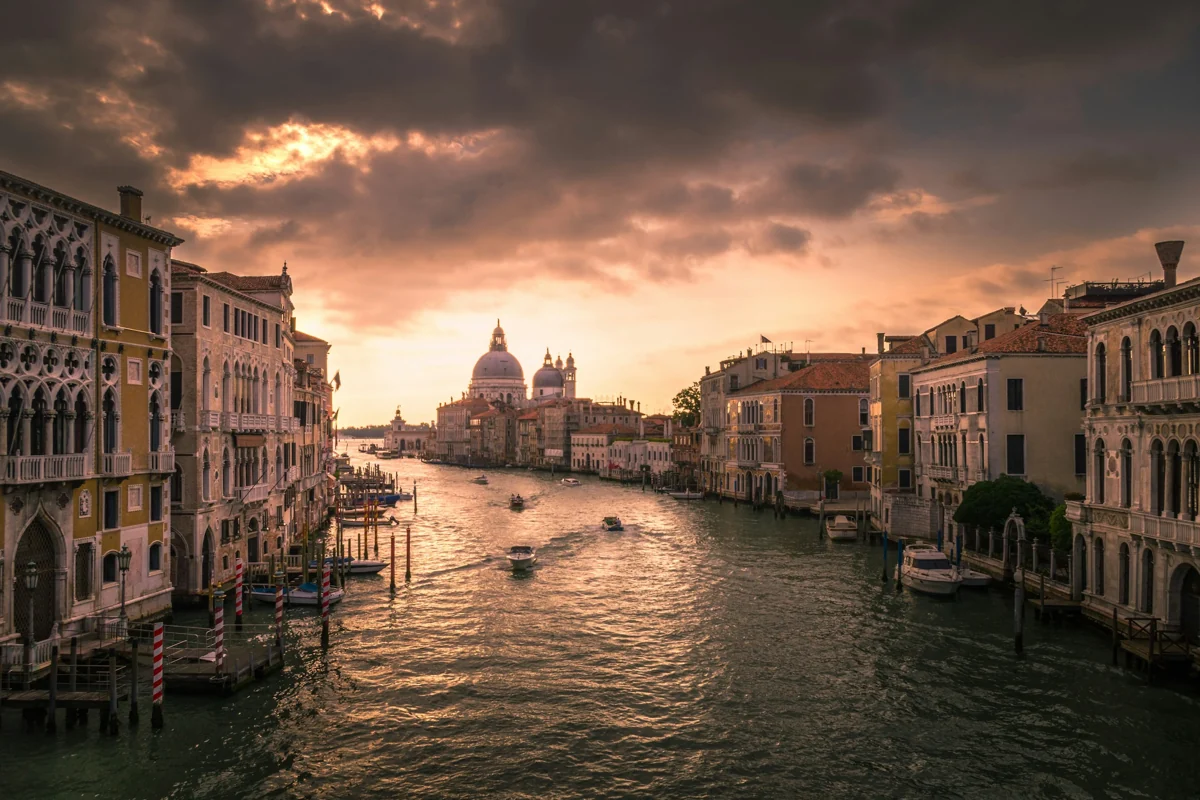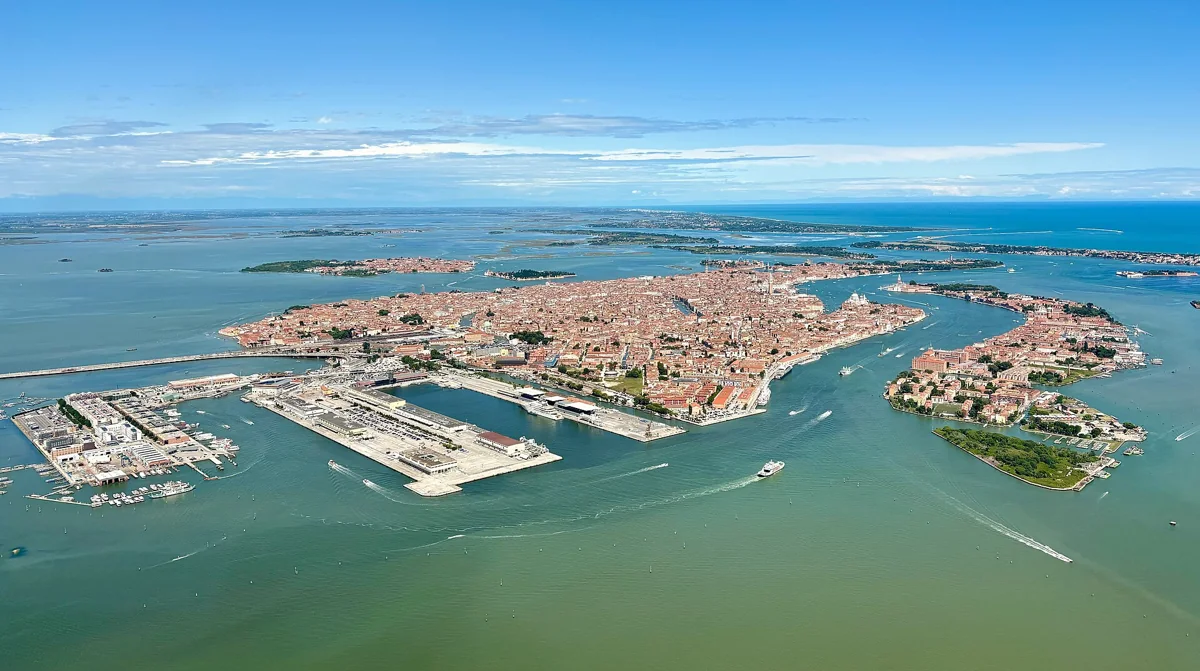
The most important arrival decision is not simply how to reach Venice, but how to reach your exact address after you get there. Roads end before most of the historic city. The final stage is usually on foot or by boat, often with bridges along the way.
Arriving at Marco Polo Airport
Marco Polo Airport has road and water connections. Road buses link the airport with Piazzale Roma in Venice and with Mestre on the mainland. Alilaguna water services and private water taxis offer different boat-based options. Compare the complete journey to your accommodation, not only the first transfer.
An ordinary city transport ticket does not automatically cover an airport journey. Check the correct product with the operator and distinguish ACTV, ATVO, Alilaguna and private taxis. They are not interchangeable services. Follow airport signs to the correct departure area and allow time to walk to water transport.
Other airports and late arrivals
If your flight uses Treviso Airport, plan from that airport’s own transport information. It is not the same arrival point as Marco Polo, and transfer time and services differ. Check where the bus ends and what you will do for the final stage.
For a late flight, verify the last useful connection and your accommodation’s check-in arrangements before departure. A delayed flight can turn an easy daytime route into a different problem. Keep the property’s exact address and contact instructions available offline.
Arriving by train
Venezia Santa Lucia is the station in the historic island city. Venezia Mestre is on the mainland. Both may appear in travel searches, so choose deliberately. From Santa Lucia, you emerge beside the Grand Canal, with walking routes and waterbus stops nearby.
A hotel described as “near Venice” may be in Mestre or elsewhere on the mainland. That can be a practical choice, but include the daily connection when comparing cost and convenience. If staying in the historic centre, ask for the recommended route from Santa Lucia.
Arriving by car or coach
Road access reaches the terminal areas around Piazzale Roma and Tronchetto. You cannot drive through the historic centre to most hotels. Reserve parking when appropriate and check the route, height limits and conditions directly with the operator.
After parking, you still need a plan for luggage and the last part of the journey. Avoid assuming that the nearest-looking hotel is easy to reach: bridges and canal crossings matter more than straight-line distance.
The final kilometre
Ask your accommodation for the most convenient arrival stop and a bridge-aware walking route. Pack so that you can lift your own luggage over steps. A light bag is a practical advantage in Venice, not just a travel preference.
Save a map before travelling and give yourself a generous buffer for the first walk. Once settled, use our getting around guide to decide when walking or a waterbus makes the most sense.
Before you go
Questions & answers
Which Venice train station is in the historic centre?+
Venezia Santa Lucia. Venezia Mestre is on the mainland.
Does a standard vaporetto pass cover every airport transfer?+
No. Check the specific airport product and operator; ordinary urban tickets and passes have exclusions.
Useful official resources
Check current opening times, prices, access and service notices with the relevant operator before travelling. Suggested visit lengths and routes are planning estimates.