Venice Journal · 2026-11-01
Venice After Dark: History Behind Its Ghost Stories
Venice is a city that seems to keep its shadows inside the stone. Five places have fed its restless imagination for centuries: Ca' Dario, the Bridge of Sighs with the Doge's Palace prisons, the San Michele cemetery, Poveglia and Teatro La Fenice. Distinguishing the document from the legend is the most honest way to approach them.
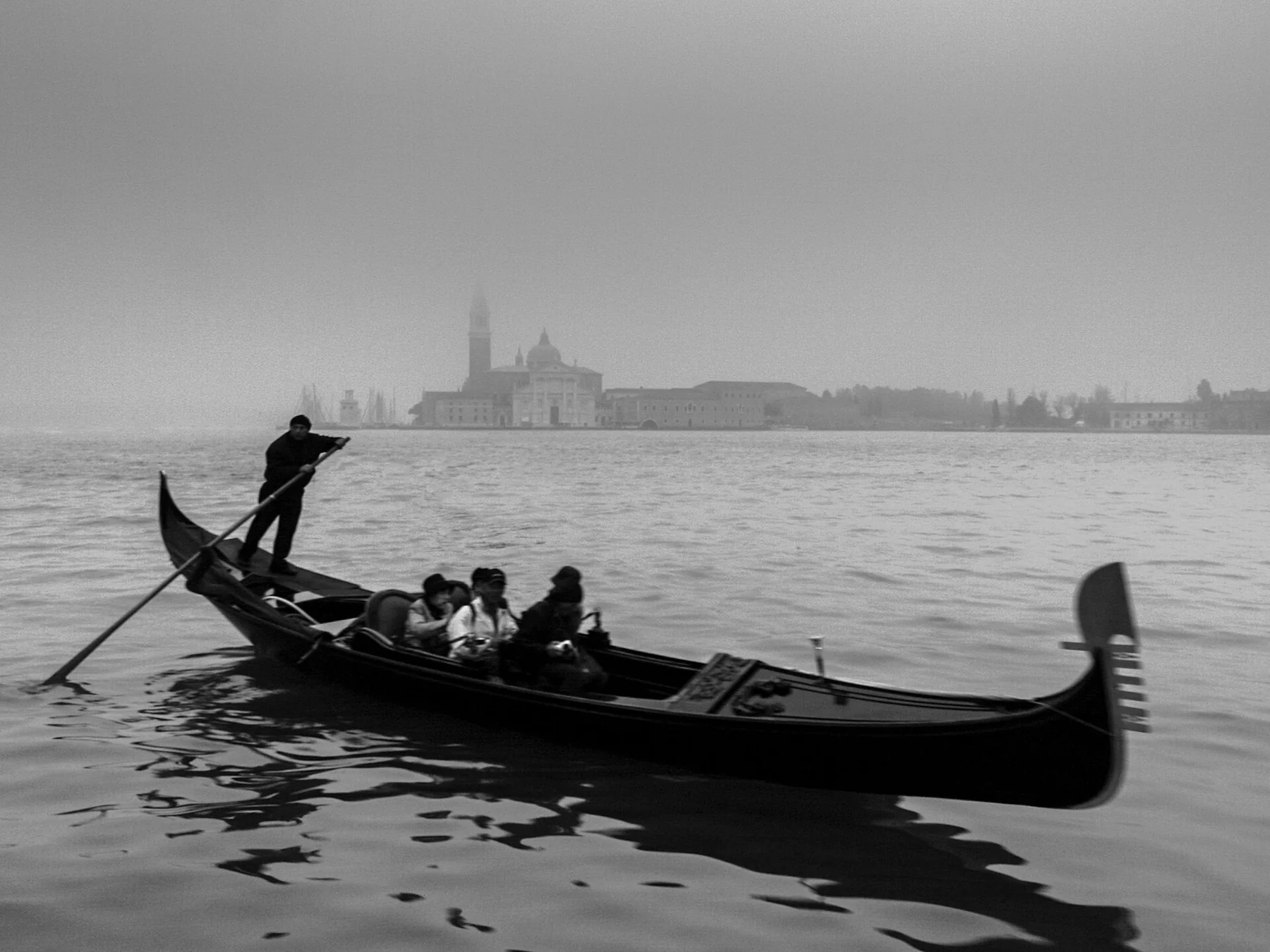
Ca' Dario, the façade of mystery
Facing the Grand Canal in Dorsoduro, Ca' Dario is a late fifteenth-century residence with a polychrome-marble façade, linked to the figure of Giovanni Dario, a diplomat in the service of the Serenissima. The cited sources, including the State Archives of Venice and Treccani, document his career and the three wills drawn up in 1489, 1492 and 1493, before his death in 1494. These are verifiable historical data, not clues to a curse.
The building's sinister reputation is a later addition: the so-called curse of Ca' Dario belongs to folklore, not to established history. Research confirms neither serial misfortunes nor supernatural presences. Today the building is a private residence, not a public museum: its façade can be observed from public and lawful viewpoints, without imagining interior access that does not exist.
The Bridge of Sighs and the Doge's Palace Prisons
According to the official documentation of the Doge's Palace, the Bridge of Sighs was built in 1614 to connect the palace to the New Prisons, through two enclosed corridors. Its famous name arose in the Romantic period and was meant to evoke the prisoners' last view of the lagoon and San Giorgio. It is a powerful literary suggestion, but it remains a late naming, not a chronicle of supernatural events.
The Prisons and the bridge are visited according to the procedures and hours indicated by the official information of the civic museums. There are no documented ghosts: what the documents attest to is the architecture, the prison function and the Romantic fortune of the place. Anyone wishing to visit the interiors must rely exclusively on updated official information, without taking routes or access for granted.
San Michele, the island of memory
The San Michele cemetery came about after the Saint-Cloud edict of 1804: in 1807 the island of San Cristoforo was chosen and the cemetery was completed in the spring of 1813. Later the adjacent San Michele was added, with the filling of the canal between 1835 and 1839. These are dates and passages reconstructed by the Comune di Venezia, which describe an active place of burial and remembrance, not an attraction to be consumed in haste.
A visit requires respect and attention to the rules and access hours in force, to be checked before setting out. This is not a stage for tales of terror, but a working cemetery: silence, care for the paths and respect for the graves are an integral part of the experience. No reliable source places apparitions or unexplained phenomena there.
Poveglia, the legend and the prohibitions
In the collective imagination Poveglia has become the most haunted island in the world. An academic study by Cavallo and Visentin, published in Shima in 2020, reconstructs how this narrative arose and circulated, without establishing any paranormal event. Information from the Poveglia per tutti association, updated to 1 November 2026, specifies that the built-up island is managed by the State Property Agency and that landing is prohibited; the northern undeveloped part has been under concession since 1 August 2025 and the temporary pontoon does not meet safety requirements.
The same source recalls that Poveglia was a quarantine station, not a mass grave, and a geriatric sanatorium, not a paranormal asylum, with health functions between 1782 and 1968. There must be no suggestion of landing or approaching without explicit authorization: it is not a public stop to be visited independently. The fascination of the place remains, but it should be left to distance and historical research.
La Fenice, the resilience of a theatre
Teatro La Fenice, according to the Foundation's official history, was destroyed by fire on 29 January 1996 and rebuilt on the principle of as it was, where it was, reopening in 2003. No ghosts are needed to tell this place: the fire and the reconstruction are documented and suffice to make it a powerful metaphor of civic and cultural resistance.
Visits should be arranged according to the official schedule of tours and performances, without inventing apparitions or unverified anecdotes. La Fenice reminds us that a theatre can rise from its own ashes, but the account must remain faithful to the facts. A reader need not and cannot visit all five places in a single evening: it is better to choose calmly, check updated information and respect the rules of each site.
Keep exploring
Sources and photo credits
Independent, AI-assisted editorial based on the sources below. Historical evidence is distinguished from folklore; no paranormal claim is presented as fact.
- Venice after dark: history behind the ghost stories — official source · 2026-11-01
- Photo: Njsmith3 · Source · CC BY-SA 4.0. Responsive image display.
- Ca’ Dario: history and visitor access
- Doge’s Palace: Prisons and Bridge of Sighs
- Comune di Venezia: San Michele cemetery
- Cavallo and Visentin, Shima (2020): Poveglia’s haunted-island narrative
- Poveglia per tutti: access and historical FAQ
- Teatro La Fenice: official history
