Venice Journal · 2026-11-12
Getting to Venice: Plan Your Arrival from Address to Airport
Most arrival advice stops at the airport bus or the station steps. The decision that shapes your first hour is narrower: how you reach one specific address with your own bags, past the bridges between water and door. This itinerary works backwards from that door to the terminal, then through the ticket and fallback choices that make the plan hold.
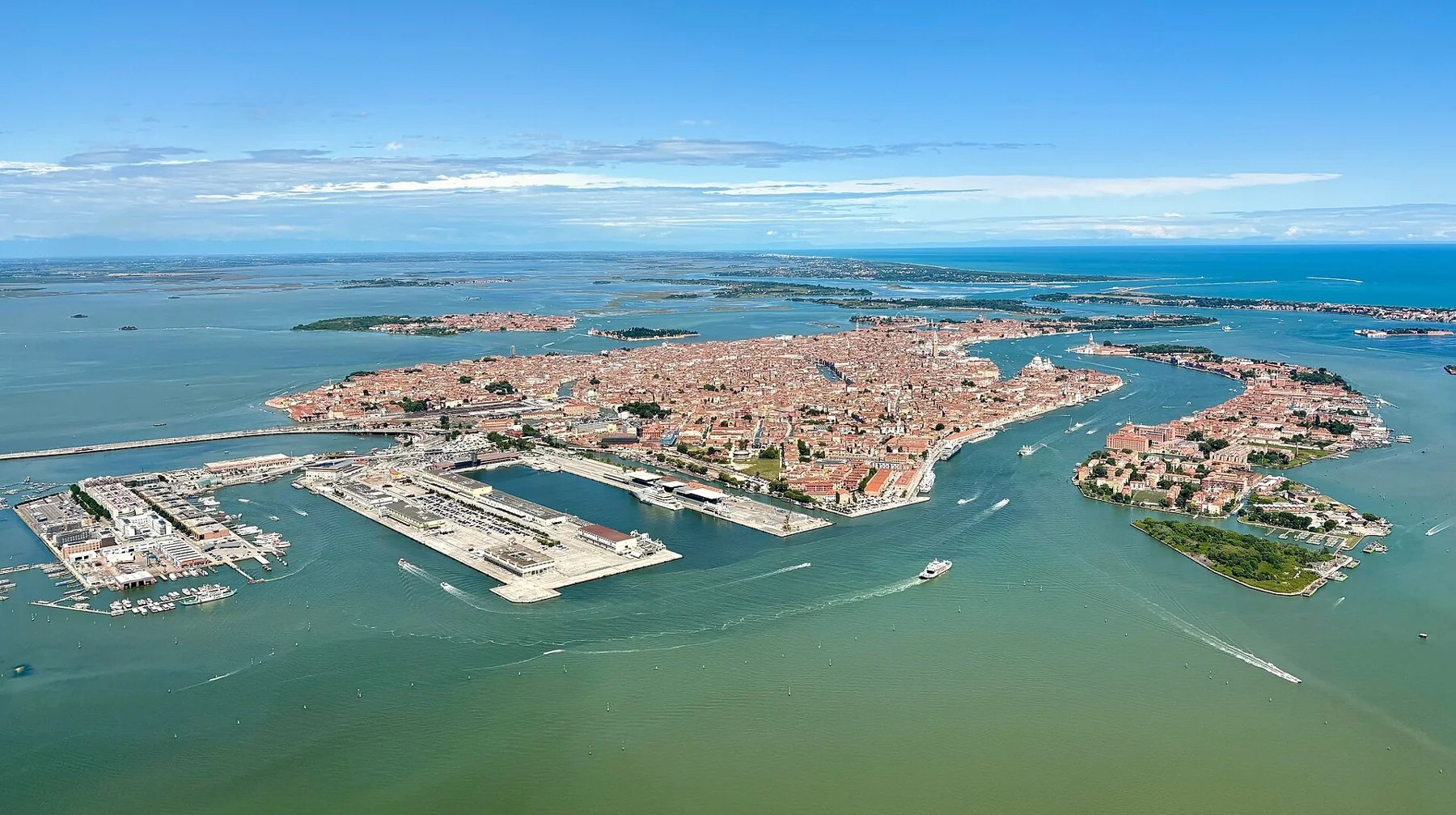
Start with the door, not the terminal
Open your booking and note three things before comparing any transport: the exact arrival point named in the reservation, the street address of the accommodation, and the contact instructions for check-in. Searches for Venice often return properties described loosely as near the city. A place in Mestre or elsewhere on the mainland can be a sensible base, but the daily crossing into the historic centre belongs in the same calculation as the room rate.
Then ask the property which stop it recommends for guests arriving with luggage, and whether that walk crosses stepped bridges. Roads end before most of the historic city, so the last stage is usually on foot or by boat, often with bridges along the way. Distance on a map says little here: a canal or a flight of steps can separate two points that look adjacent. Once you have a recommended stop and a bridge-aware route, the rest of the arrival has a target.
Marco Polo: match the mode to your final stop
Marco Polo Airport has road and water connections. Road buses link the airport with Piazzale Roma in Venice and with Mestre on the mainland. Alilaguna water services and private water taxis offer boat-based options. These are different operators with different products and are not interchangeable. Follow airport signs to the correct departure area and allow time to walk to the water transport.
Compare the whole chain rather than the headline transfer: terminal to departure point, the bus or boat itself, any change, and the final walk with bags. An ordinary city transport ticket does not automatically cover an airport journey, so check the correct product with the operator. Where a boat is involved, confirm which landing best serves the accommodation; where a bus is involved, work out what happens after it reaches Piazzale Roma or Mestre. The airport sources in our getting to Venice guide were checked on 9 October 2026, so use the current operator timetable for your date.
Treviso, trains and the station you booked
If your flight uses Treviso Airport, plan from that airport's own transport information. It is not the same arrival point as Marco Polo, and transfer time and services differ. Establish where the connection ends, then decide how you cover the last stage from there. The same care applies to rail. Venezia Santa Lucia is the station in the historic island city; Venezia Mestre is on the mainland. Both can appear in searches, so choose deliberately.
From Santa Lucia you emerge beside the Grand Canal, with walking routes and waterbus stops nearby. If you are staying in the centre, ask for the recommended route from Santa Lucia before travelling and treat that walk as part of the journey. If your hotel is in Mestre or further out, include the daily connection when weighing cost against convenience. That trade between a cheaper mainland base and time spent crossing is a real planning decision, not a detail.
By car or coach: where the road hands over
Road access reaches the terminal areas around Piazzale Roma and Tronchetto, but you cannot drive through the historic centre to most hotels. Reserve parking where appropriate and check the route, height limits and conditions directly with the operator. Coach arrivals follow the same logic: the vehicle sets you down at a road terminal, and the remaining journey is yours to plan.
After parking you still need a plan for luggage and the last stretch, including any boat crossing or bridge. Avoid assuming the nearest-looking hotel is easiest to reach; bridges and canal crossings matter more than straight-line distance. Imagine covering the final stretch twice, once with all your bags and once in the dark after a delay. If that feels uncomfortable, look for a different stop, a water connection or another base before committing.
The final kilometre and a late-arrival plan
Ask your accommodation for the most convenient arrival stop and a bridge-aware walking route, and pack so you can lift your own luggage over steps. A light bag is a practical advantage in Venice, not merely a preference. Save a map and written directions before travelling, and allow a generous buffer for the first walk. Once settled, our getting around guide helps you decide when walking or a waterbus makes more sense.
For a late flight, verify the last useful connection and the property's check-in arrangements before departure, because a delay can turn an easy daytime route into a different problem. Keep the exact address and contact instructions available offline, plus a fallback transfer. If you book a private transfer, ask whether it follows a delayed flight or has a fixed departure, and confirm the complete price, luggage allowance and destination landing beforehand. Check changing arrangements with the operator before travelling. A water taxi is not a shared waterbus journey, and a booked transfer does not guarantee that reception stays open.
Tickets for the journeys you will actually make
ACTV's fare page, checked on 9 October 2026, lists the standard 75-minute Rete Unica ticket at €9.50 and the Venezia Daily Pass at €25 for 24 hours; three separate 75-minute tickets cost €28.50. At those published rates, three covered journeys within 24 hours make the daily product €3.50 cheaper. Count ticket-validity periods rather than every boarding, since a change within a valid ticket's conditions does not necessarily require another ticket. This example excludes airport travel, supplements and concessions, so recheck eligibility, covered services and live prices before buying.
A pass is not automatically right. Days spent mainly walking may not justify the same product as a stay on Giudecca or a full island day. Validity is generally measured from activation or validation under the product's conditions, not the calendar date in your plans, and exclusions matter: airport travel, Alilaguna services and certain routes are not automatically included in ordinary ACTV products. At the landing stage, check line number, direction and stopping pattern, because large stops can have several platforms. Build the arrival first, then let tickets follow.
Keep exploring
Sources and photo credits
Independent travel editorial, drafted with AI assistance using our existing guides. Check changing practical information with official operators.
- Getting to Venice — a thoughtful itinerary — Visit Venezia · 2026-10-28
- Photo: kallerna · Source · CC BY-SA 4.0. Responsive image display.
