Venice Journal · 2026-11-05
Venice on a rainy day: a thoughtful itinerary for wet weather
Rain rarely closes Venice, but it changes how the city works. Lanes narrow, bridges become slower and the temptation to cross town for a single museum grows. This itinerary keeps the day compact: choose one district, give one substantial interior proper time, and treat a second visit as optional rather than a target to chase through the rain.
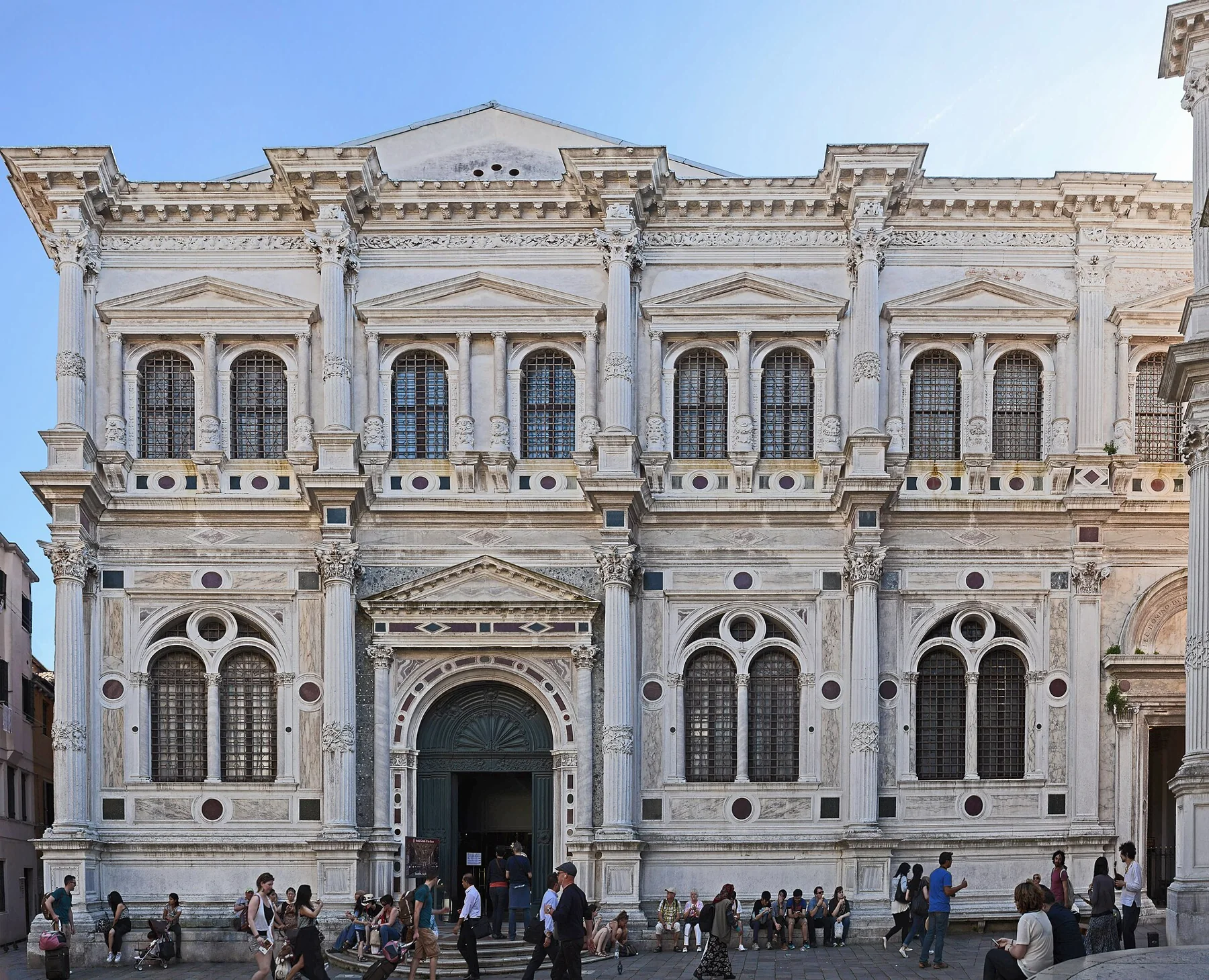
Choose one district before choosing a second museum
Start from where you are staying or from a visit already booked, and let that decision shape the day. In San Polo, the Frari and the Scuola Grande di San Rocco sit close together and form a natural pairing with little walking between them. In Dorsoduro, pick either the Accademia or the Guggenheim and set a nearby break around it. Around St Mark's Square, give one substantial interior enough time instead of dividing the hours between several.
Treat the second museum as optional, not as something the weather obliges you to do. Crossing Venice simply to fill a wet afternoon usually costs more time and comfort than it returns. Before setting out, check each place's opening day, last admission, bag arrangements and any timed-entry requirement with the operator, then leave a realistic gap for the walk and a pause. Indoor visits still involve outdoor travel, and the shortest line on a map is not automatically the easiest one with children, luggage or limited mobility.
What a San Polo pairing involves
The Frari and San Rocco are frequently suggested together because the walking connection between them is short, but that link is an ordinary outdoor street route, not a covered passage and not a promise of step-free access. Plan it as two separate visits with a gap in between, and confirm both are open before you commit to the pairing. If one is closed or a church service affects visiting access, the day still works: keep the open venue and add a canal-side walk between showers rather than replacing it with a distant alternative.
For the Scuola Grande di San Rocco, venue-specific details such as current visiting arrangements belong on the official website, which is the place to confirm them before travelling. Our planning advice is narrower: allow more time than a quick look, keep the second stop flexible, and note that museum bag rules may affect what you carry. A compact waterproof layer is easier to manage in narrow lanes and crowded interiors than a large umbrella.
Around St Mark's Square and a theatre option
The Doge's Palace can absorb several hours on its own, and the Correr is another substantial option near St Mark's Square. Choosing both on the same wet day defeats the purpose of a calm itinerary; pick one and let it anchor the afternoon. Teatro La Fenice is worth considering for architecture and music history when daytime visits are available, and it can work as the single interior of a day rather than an addition to a heavy schedule.
Check what each visit involves before buying: booked entry slots, bag storage and the walk between them all affect how comfortable the day feels. Leave clear space between timed entries rather than stacking them. If the rain is heavy, queues and wet streets will slow you down, and a tight schedule turns an indoor day into a rushed one. One concise check with the operator covers changing arrangements; nothing here should be read as a current timetable.
Rain and high water are different problems
A wet-weather plan is not automatically an acqua alta plan. For tide conditions, use the municipality's Centro Maree page rather than an old news article about a previous event, and check both the issue date and the period the forecast covers. Our rainy-day guide, reviewed 5 October 2026, does not report a live water level, and a normal walking map cannot tell you whether a flooded route is passable. Follow current local instructions rather than improvising.
If your planned visit becomes difficult to reach, contact the venue about entry arrangements and your booking terms, and choose a nearby alternative. Do not assume a ticket automatically allows a change of date. Keeping the day anchored in one district makes this easier: a short walk back to a warm interior is a better response to a sudden shower than a long transfer across the city.
Transport, shoes and keeping the day flexible
Walking remains the backbone of any Venetian day, including a wet one. Expect narrow lanes, stepped bridges and routes that turn inland when a canal blocks the way, and allow more time than the distance suggests. Footwear with grip on wet stone matters more than an elaborate plan, and stepping aside before stopping keeps bridges clear for people carrying goods or travelling to work.
Waterbuses can shorten a walk that rain makes unpleasant, but read the route number, direction and stopping pattern at the landing stage, since large stops may share a name across several platforms. Compare a pass with the journeys you actually expect: ACTV's fare page, checked 9 October 2026, listed the standard 75-minute Rete Unica ticket at €9.50 and the Venezia Daily Pass at €25 for 24 hours, with three separate 75-minute tickets at €28.50. That example excludes airport travel and supplements, so recheck current conditions before buying. Saving island outings for weather that suits them is often the better choice; if your schedule is fixed, check outbound and return timetables before leaving.
Keep exploring
Sources and photo credits
Independent travel editorial, drafted with AI assistance using our existing guides. Check changing practical information with official operators.
- Venice on a rainy day — a thoughtful itinerary — Visit Venezia · 2026-11-05
- Photo: Didier Descouens · Source · CC BY-SA 4.0. Responsive image display.
