Venice Journal · 2026-11-03
The Grand Canal by Water and on Foot: A Practical Venice Itinerary
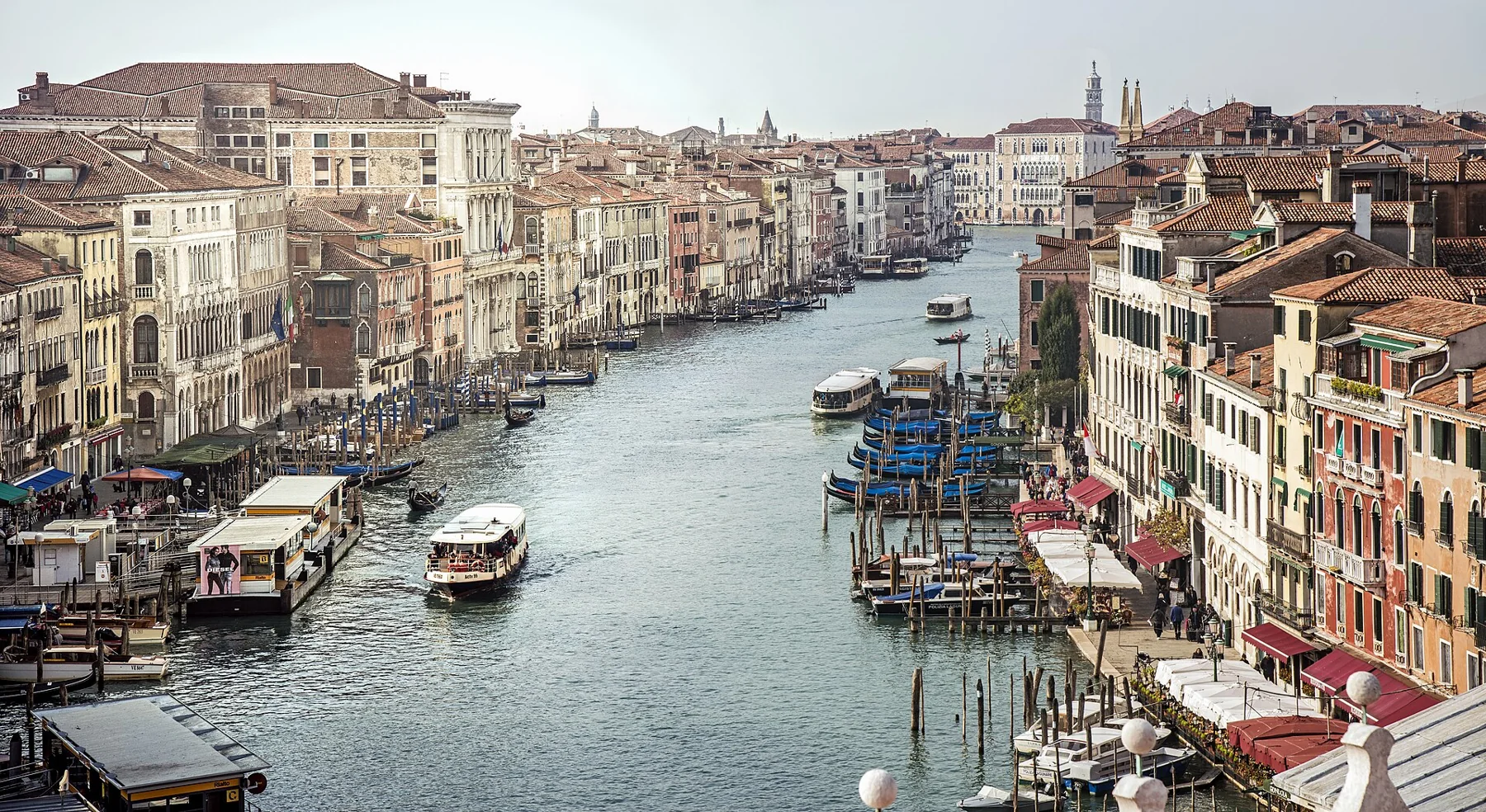
The Grand Canal is Venice's main street and its grandest stage at once. Palaces show their finest faces to the water, while boats carry residents, deliveries and visitors through a changing panorama. This itinerary treats the canal as a route to plan rather than a single sight, pairing a water journey with short walks to viewpoints and selected palace stops.
Start with the canal as a whole
Before choosing individual palaces, it helps to understand why the canal shapes the way you move. Our guide describes it as the city's principal stage and one of its essential transport routes: a waterway lined with façades that were designed to be read from a boat, while many streets behind them turn inland rather than following the water.
That single fact determines the plan. A waterbus gives you a long, continuous reading of the canal's architecture; walking gives you detail, neighbourhood texture and the chance to look back at buildings from the far side. Use the water for the overview and your feet for everything that cannot be seen from a seat, and resist treating every journey as a transfer to be endured.
Order the route: outer reaches, then the busy middle
A sensible sequence begins away from the densest section and moves towards it. Start at the Santa Lucia railway station or Piazzale Roma side, where the canal opens, and travel towards Rialto and the San Marco basin. This lets the palaces appear in succession and gives you a mental map of the historic centre early in your stay.
Alternatively, begin near the basin and work outward if that suits your accommodation. Either way, decide in advance where you will get off. Trying to see the whole canal, then doubling back on foot, wastes the advantage of a linear water route. Two or three deliberate stops usually serve better than many rushed ones.
Palace façades to notice from the water
Read the waterfront as a sequence of architectural languages rather than a checklist. Our guide points to Ca' d'Oro, Ca' Pesaro and Ca' Rezzonico as different expressions of palace architecture, and notes that near the basin the domes of the Salute become the culminating landmark. Gothic tracery, Renaissance symmetry and Baroque weight follow one another along the banks.
Several palaces carry short institutional histories in our collection, useful for identifying what you are passing. Ca' Foscari's position on a wide bend, Ca' Rezzonico's long building history and the unfinished, low profile of Palazzo Venier dei Leoni all read differently from the water than from a photograph. Keep such notes brief so the boat journey remains a journey, not a lecture.
A single palace stop, and how to treat official information
Choose one palace or museum interior to visit properly instead of attempting several. Ca' d'Oro is one candidate: according to its official website, Baron Giorgio Franchetti bought and restored the building and donated the palace and his collection to the Italian State in 1916, and the courtyard mosaic and the 1427 wellhead by Bartolomeo Bon form part of the museum story. Verify current opening arrangements with the operator before relying on them.
Ca' Rezzonico is another, and our guide notes that today the palace tells the story of eighteenth-century Venetian life through rooms, furnishings and art. For any of these, check the official venue page for what is currently open, what a ticket includes and whether interiors can be visited at all; some canal-side palaces are institutions, hotels or private property rather than museums.
Viewpoints on land, tickets and practical limits
The Rialto Bridge and the Accademia Bridge offer the famous perspectives, and both work well as the end point of a walking stretch rather than a destination reached by boat alone. Smaller canal-side spaces can be quieter, but there is no continuous pedestrian promenade along both banks: expect streets that end at water and routes that turn inland, and do not enter private hotel terraces or boat landings for a view.
For boats, check the route number, direction and stopping pattern at the landing stage, since large stops can have several platforms and services differ. Our transport guide, citing ACTV's fare page checked on 9 October 2026, lists the standard 75-minute Rete Unica ticket at €9.50 and the Venezia Daily Pass at €25 for 24 hours; compare these with the journeys you actually plan, as prices and conditions can change. A vaporetto is public transport, not a gondola, and a gondola ride is a separate experience.
Making the route work for your stay
If you have mobility needs, plan with official accessible-route information: a short-looking stretch may include stepped bridges, and our accessibility guide sets out what to verify before committing to a route.
A Grand Canal journey works best early in a stay, giving you a picture of the city's shape before you explore the lanes, and again on foot at a selected palace or district that caught your attention.
Keep exploring
Sources and photo credits
Independent travel editorial, drafted with AI assistance using our existing guides. Check changing practical information with official operators.
- The Grand Canal — a thoughtful itinerary — Visit Venezia · 2026-11-03
- Photo: Didier Descouens · Source · CC BY-SA 4.0. Responsive image display.
