Venice Journal · 2026-11-22
San Polo, Venice: a district walk from Rialto to Dorsoduro
San Polo packs a great deal of Venice into a small area. Market streets meet quiet lanes, broad squares open without warning, and two substantial pairings reward a slow half-day. This guide suggests a route order, explains what to notice along the way and sets out how to reach the district without wasting the morning at the wrong boat stop.
Arriving from Rialto and reading the market edge
Most visitors enter San Polo over the Rialto Bridge, and this is the right place to start. The bridge itself is a crossing rather than a viewpoint to linger on, so keep moving and let the district open up on the western bank. Across the bridge you reach the part of Venice most closely associated with its historic markets, and the surrounding streets are worth exploring before you settle on a place to eat.
The market area is worth walking before you choose somewhere to eat, and if seeing activity matters to you, plan a morning visit and check the day's trading schedule. Trading is concentrated in the morning and varies by stall type. Treat the stalls as a workplace: keep passageways open, move aside before stopping, ask before photographing people closely and avoid handling produce without permission. Our advice is to walk a loop through these lanes rather than a straight line, then return towards the bridge. Noticing how goods move through the streets tells you more about San Polo than any single stop.
Crossing the interior towards Campo San Polo
From the market side, head inland towards Campo San Polo rather than following the signs to San Marco. This is where the district's character changes: shop windows give way to residential doorways, and the route bends constantly. There is no continuous walkway along the Grand Canal, so expect lanes that turn inland when water blocks the way, with small signs pointing to larger destinations rather than to the street you need next.
Campo San Polo is the natural pause. It is one of the broad open spaces that interrupt the Venetian maze, and it works well as a place to sit, consult a map and decide how much time you want for interiors. Allow more time than the distance suggests; crowds, photographs and small navigation errors are normal. If a lane ends at the water, retrace your steps and use the next bridge. Nothing on this route needs to be rushed, and a wrong turn in San Polo usually costs a few minutes rather than the day.
The Frari and San Rocco: two interiors, one pairing
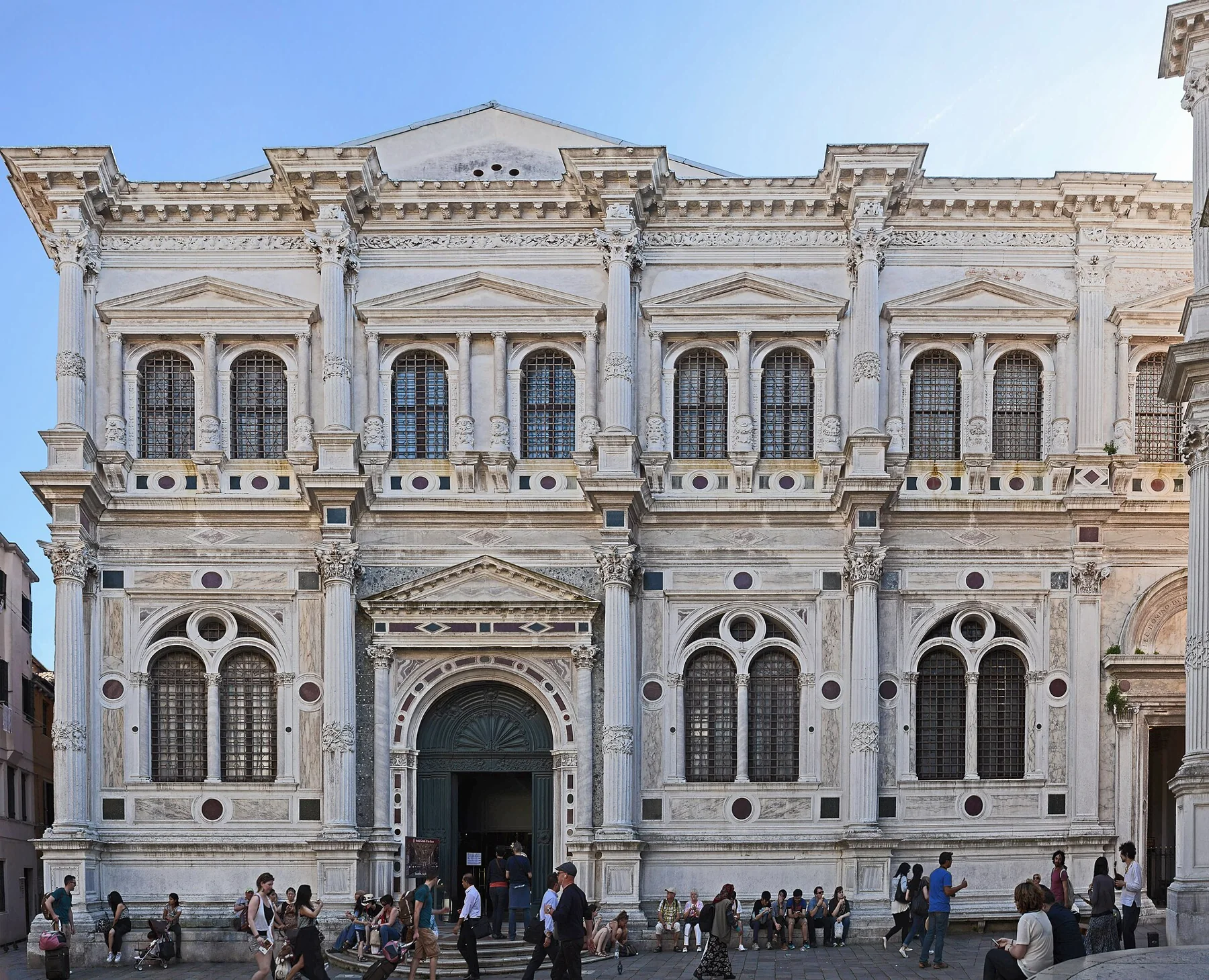
The Basilica dei Frari and the Scuola Grande di San Rocco make an excellent art-focused pairing, and they are close enough to visit in sequence. They are separate venues with their own entrances and conditions, and church access can be affected by worship. Our San Polo guide notes that paintings and sculptural monuments inhabit a spacious church at the Frari, while at San Rocco Tintoretto's narrative cycles surround you across walls and ceilings. Check current opening times, admission and access arrangements with each operator.
Allow enough time for both, with a break between them. Trying to count masterpieces turns a rewarding visit into a checklist; comparing the two interiors is more interesting. Notice how differently light, scale and purpose operate in a working church and in a confraternity's meeting house. If you only have energy for one substantial interior, choose one deliberately and give it proper attention. This is also a sensible point to pause for lunch nearby before continuing, so that the second interior is not seen in a tired blur.
Finishing the walk towards Santa Croce or Dorsoduro
The route is deliberately flexible. After San Rocco, you can walk towards Santa Croce or down towards Dorsoduro, both of which connect naturally to San Polo's western and southern edges. Use the broad direction signs and a map together: signs help with the general heading, but a precise address still needs a map, and in this part of the city the difference between two turnings can be considerable.
Think about your return before you are tired. San Polo's interior can involve several stepped bridges from a boat stop, so verify the nearest useful stop for your route, especially with luggage or reduced mobility. If you plan to use vaporetti later, compare a pass with the journeys you actually expect to make; several days spent mainly walking may not justify one. Recheck eligibility, covered services and live prices with ACTV before buying, and remember that airport travel and Alilaguna services are not automatically included in ordinary products.
Practical decisions for a San Polo half-day
A half-day is realistic for the market lanes, Campo San Polo and one interior; a full day allows both the Frari and San Rocco at a comfortable pace. Start on the market side, work inland, pause in the campo, then take the two interiors in whichever order suits the opening arrangements you have confirmed. Keep a specific destination in mind rather than hoping to stumble on a single address, and accept that the pleasure of San Polo lies partly in its thousand turns.
For mobility needs, plan with official accessible routes and transport information rather than assuming a route is step-free. A route that looks short can include several stepped bridges. Beach and island trips are not part of this walk: this is a district day, best kept on foot and finished before the evening crowds tighten the Rialto lanes. If your time is limited, cut one interior rather than the campo pause. Book any paid admission separately in the knowledge that each venue is independent, and check changing arrangements with the operator shortly before you travel.
Keep exploring
Sources and photo credits
Independent travel editorial, drafted with AI assistance using our existing guides. Check changing practical information with official operators.
- San Polo — Visit Venezia · 2026-11-22
- Photo: Didier Descouens · Source · CC BY-SA 4.0. Responsive image display.
