Venice Journal · 2026-11-20
San Polo on Foot: A Rialto to Frari Itinerary
San Polo packs a remarkable amount of Venice into a small district: the working life of the Rialto market, narrow shopping lanes, and two substantial interiors of church and scuola. This itinerary sets a sensible order for a half to full day, explains how the pieces connect on foot, and flags what to check before you rely on it.
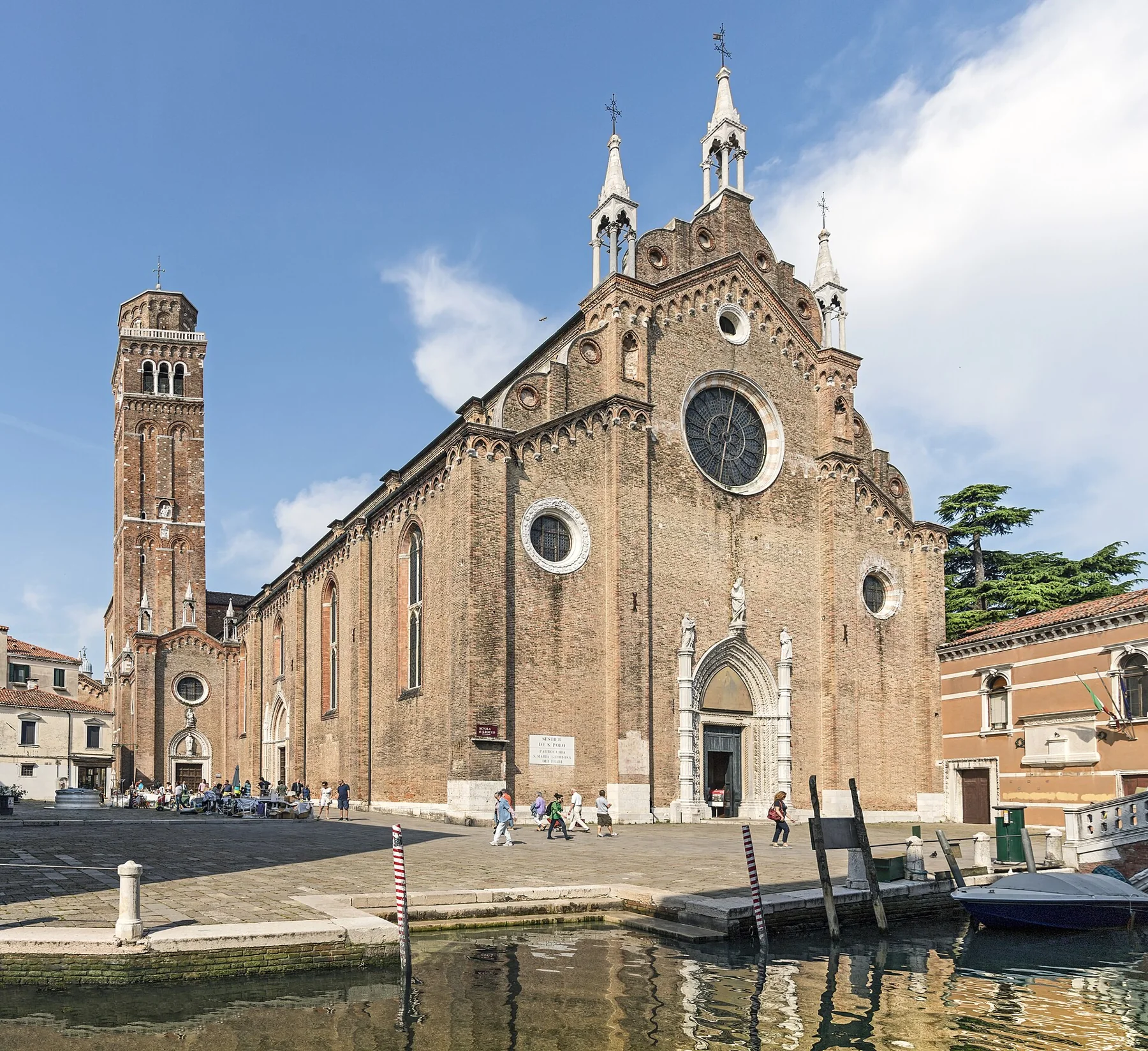
Why San Polo Rewards a Slower Route
San Polo sits on the far side of the Grand Canal from San Marco, reached most obviously by crossing the Rialto Bridge. Our neighbourhood guide describes a district where markets, small shopping streets, brick churches and a broad campo follow one another without warning. The common mistake is to treat San Polo as a corridor between the bridge and somewhere else. Walked more slowly, it offers a compact introduction to how the historic centre layers trade, worship and everyday lanes together.
The area suits travellers who are content to wander without a fixed tick-list. The guide suggests half a day to a full day, with Rialto Market as a starting point and the Frari and San Rocco as the landmarks not to skip. That range is realistic: the distances are modest, but narrow streets, crowds and the time needed inside two large interiors determine the day more than geography does.
Starting at the Rialto Market Side
Begin where the Rialto Bridge lands on the San Polo side, then explore the lanes around the market before choosing somewhere to eat. Our guide recommends a morning start if market activity is the point of the visit, with the caveat that trading varies, and advises checking the day's schedule rather than assuming a full day of stalls. In planning terms, treat the market as the opening quarter of the day and a place to orient yourself, not a sight with a fixed duration.
The market is a workplace first. Our guide asks visitors to keep passageways clear, ask before photographing people closely, and avoid handling produce without permission. Those are practical conditions for being there at all, not etiquette for its own sake. Carry that mindset into the surrounding lanes: the appeal is as much in the exchange between vendors and buyers as in the display of produce.
A Flexible Line Across the District
From the market side, walk towards Campo San Polo and pause in that open space before continuing through the lanes to the Frari. Our guide then suggests adding San Rocco if you still have energy for another substantial interior, before walking on towards Santa Croce or down towards Dorsoduro. This is deliberately a direction rather than a tight sequence: San Polo's value lies in what you notice between the named stops, and the campo gives you a clear reset point halfway.
Navigation needs modest patience. Our guide notes that small signs often point to larger destinations rather than the street you need next, and that a lane sometimes ends at water. When that happens, retrace your steps and take the next bridge. Build in a margin for exactly this: a ten-minute correction is normal, not a failure of planning, and the guide's advice not to rush is the practical core of walking here.
Frari and San Rocco: Planning Two Interiors
The Basilica dei Frari and the Scuola Grande di San Rocco form what our guide calls an excellent art-focused pairing. At the Frari, paintings and sculptural monuments occupy a spacious church; at San Rocco, narrative cycles surround visitors across walls and ceilings. According to the venues' official websites, these are independent operations, and access to the church can be affected by worship. Allow generous time for each and keep a break between them rather than chaining the two visits together.
Our guide frames the comparison as more rewarding than counting masterpieces: notice the difference in light, scale and purpose between a working church and a scuola. Keep venue-specific details such as current opening times and prices with each official website, and remember that one venue's ticket does not imply entry to the other. If you only have room for one interior, choose according to whether you want the atmosphere of a church in use or a sustained narrative cycle, and let the rest of the route breathe.
Lunch, Departures and Sensible Alternatives
San Polo works well for a lunch built around small dishes and a slower stroll. Our guide suggests a counter of cicchetti as a way to sample several flavours without committing to a long meal, and reminds readers to check prices and seating arrangements, noting that a drink-and-snack stop is not always a substitute for dinner. Treat lunch as part of the walk: eat near the market or the lanes behind it, then resume rather than returning to the starting point.
For transport, the district sits on the San Polo side of the Grand Canal, reachable via the Rialto Bridge, but its interior can involve several bridges from a boat stop. Our getting-around guide advises verifying the nearest useful stop for your arrival route, especially with luggage or reduced mobility, and stresses that a short-looking route may include stepped bridges. If the walk feels too long, end at Santa Croce or head down towards Dorsoduro rather than doubling back across the district; check changing arrangements with the operator where relevant.
Keep exploring
Sources and photo credits
Independent travel editorial, drafted with AI assistance using our existing guides. Check changing practical information with official operators.
- San Polo — a thoughtful itinerary — Visit Venezia · 2026-11-20
- Photo: Didier Descouens · Source · CC BY-SA 4.0. Responsive image display.
