Venice Journal · 2026-11-15
San Marco, Venice: A Thoughtful Walking Itinerary
San Marco is Venice at its most theatrical: gold mosaics, arcaded palaces and the open water of the basin meet in a district that rewards both a first visit and a slower return. This itinerary uses the square as a starting point, then follows quieter squares and canals towards Santo Stefano and the Accademia Bridge, leaving room for one substantial interior visit.
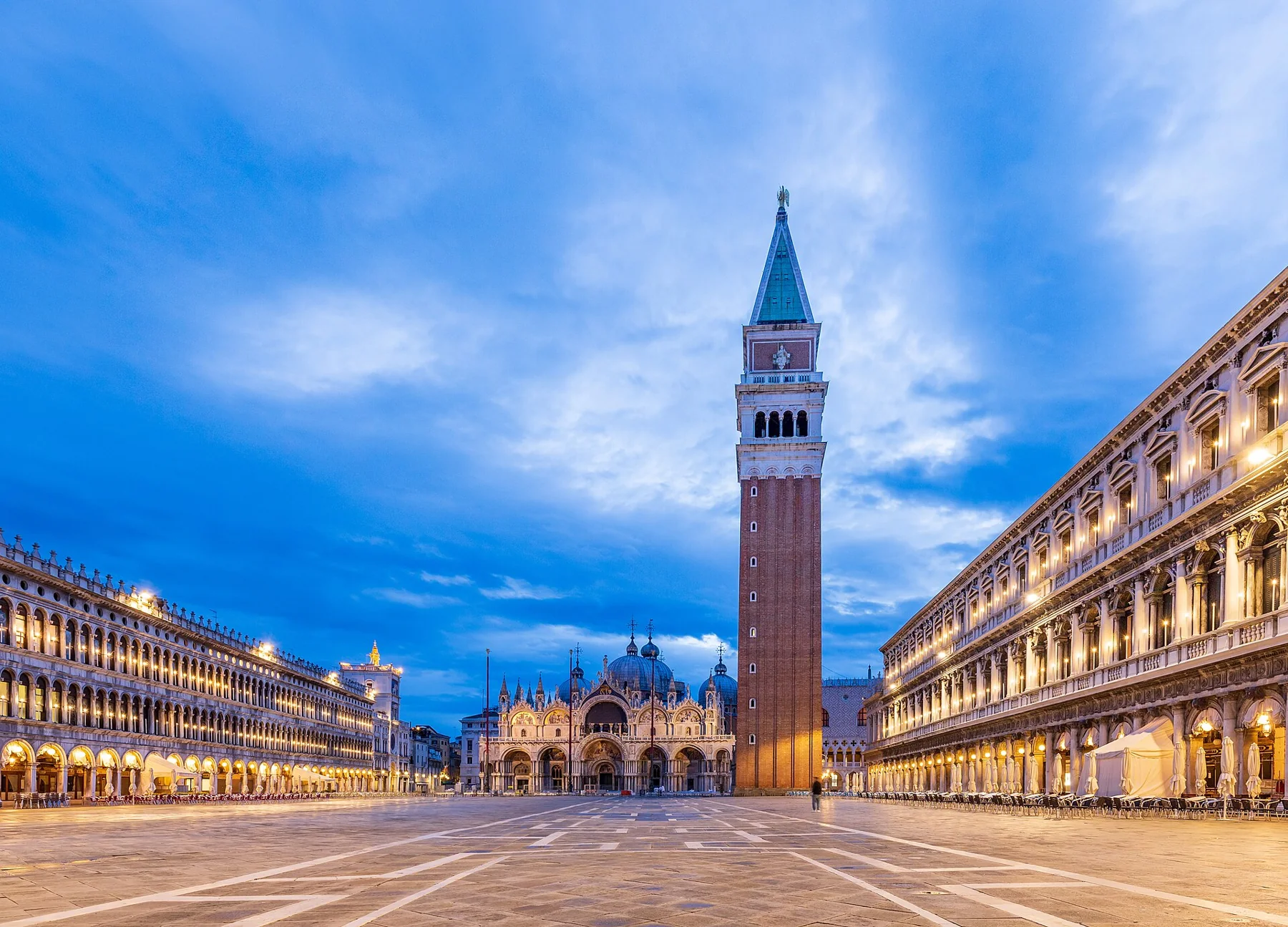
Why start at St Mark's Square
The square is the natural beginning because it sets the scale for everything that follows. Our guide describes the district as the place where the Venetian Republic expressed its power, with the basilica closely tied to the doge and the neighbouring Doge's Palace holding the machinery of government. Arriving here first means you meet that idea before the streets narrow and the city becomes a sequence of smaller stages.
Look beyond the basilica to the long rhythms of the Procuratie and the astronomical face of the Clock Tower, and across the water to the white church of San Giorgio Maggiore, which completes the view. Early morning suits an outdoor walk and photography, and evening changes the atmosphere again as the day's excursions leave; neither guarantees empty streets, particularly around major events. Keep church visits tied to their published visiting periods, which differ from worship access.
Choosing one interior, not three
Our guide is explicit that the palace and basilica are separate experiences with separate admission arrangements, and its question-and-answer section warns against assuming one ticket covers both. Plan a single substantial interior visit rather than trying to absorb several in one day. Check exactly what each official ticket includes with the operator before buying, since arrangements can change.
Venue-specific detail belongs with the official website rather than with a planning article; the basilica is closely tied to the doge, the palace held the machinery of government. Treat those as orientation points, not as a checklist. If you have energy after the walk, a smaller detour such as Scala Contarini del Bovolo is a better use of it than adding another large museum.
From the waterfront to La Fenice
From the square, walk past the waterfront towards the Bridge of Sighs viewpoint, then return inland towards Teatro La Fenice. This order keeps you near the basin while the light is fresh and moves you into the denser streets as the day fills up. The route is short on a map but narrow lanes, stepped bridges and crowds make it slower than distance suggests.
This is also where the district shows its lived-in side. Leave the direct Rialto–San Marco corridor and the pace changes around Campo San Fantin, Campo San Maurizio and the lanes leading to the Grand Canal. Note that there is no continuous walkway along the Grand Canal, so an address close to it may still need an inland approach.
Campo Santo Stefano and the Accademia Bridge
Continue to Campo Santo Stefano for a pause, then towards the Accademia Bridge. Our guide recommends this sequence because it joins major sights without repeatedly crossing the same busy streets. It is a sensible half-day core; if you want a full day, add one interior and one deliberate pause rather than more stops.
A seated coffee in the square is an experience with its own price structure, so read the menu and any music supplement before sitting down. For a simpler break, look at the streets away from the principal waterfront and compare before choosing. Keep to one side in narrow streets, move aside before stopping and leave bridges clear for people carrying goods or travelling to work.
Waterbuses, tickets and returning
San Marco is reached on foot or by vaporetto, and the water option deserves planning. Check the route number, direction and stopping pattern at the landing stage; large stops can have several platforms, so the stop name alone may not be enough. Buy the appropriate ticket and validate or activate it according to ACTV's current instructions at the start of each journey and when changing services as required.
Our getting-around guide, with fares checked on 9 October 2026, lists the standard 75-minute Rete Unica ticket at €9.50 and the Venezia Daily Pass at €25 for 24 hours; three separate 75-minute tickets came to €28.50. That comparison excludes airport travel, supplements and concessions. The guide notes that ordinary ACTV products do not automatically include airport travel, Alilaguna services and certain routes. If San Marco is your base, pair the day with Dorsoduro for art and waterfront space, or continue east into Castello for a longer walk beyond the most concentrated sightseeing area, and check the exact walking route from your arrival stop before booking accommodation.
Keep exploring
Sources and photo credits
Independent travel editorial, drafted with AI assistance using our existing guides. Check changing practical information with official operators.
- San Marco — a thoughtful itinerary — Visit Venezia · 2026-11-15
- Photo: Matthias Süßen · Source · CC BY-SA 4.0. Responsive image display.
