Venice Journal · 2026-11-08
Three days in Venice: a thoughtful city and lagoon itinerary
Three days let you give the monumental city its own day, explore neighbourhoods and art on another, and dedicate a third to the lagoon. This itinerary keeps one main timed visit per half day and leaves room for weather, breaks and the small discoveries that make a trip feel unhurried.
Day 1: St Mark’s Square, the Rialto and an easy first rhythm
Begin with St Mark’s Square and your chosen major visit. If both the basilica and Doge’s Palace are essential, separate them with lunch and an outdoor walk rather than pushing through both in one stretch. Otherwise, use the afternoon for the Rialto area and San Polo. Keep the first day intentionally light: arrival, luggage and jet lag all take more out of a day than a map suggests, and an exhausting start sets a pace the rest of the trip has to carry.
Walk between stops at a realistic speed. The historic centre has narrow lanes, stepped bridges and routes that turn inland when a canal blocks the way; there is no continuous walkway along the Grand Canal. Signs towards Rialto, San Marco, Ferrovia and Piazzale Roma help with broad direction, but a precise address still needs a map. Finish with a view from the water or an evening walk, and note the boat journey you might want the next morning.
Day 2: Dorsoduro in the morning, one neighbourhood in the afternoon
Spend the morning in Dorsoduro, choosing one interior visit among the Accademia, the Guggenheim or Ca’ Rezzonico. The official websites of these venues are the source for current opening times, ticket conditions and access information; check them before fixing the day. Walk to the Salute or the Zattere afterwards for open views. Our Dorsoduro walking map links the Accademia area, the Peggy Guggenheim Collection, the Salute and Zattere, but the museums are location markers: choose one interior visit rather than treating the map as a request to enter every stop.
In the afternoon, choose Cannaregio for canal-side neighbourhoods and the Ghetto, or Castello for the Arsenale area and eastern waterfront. Choose one direction rather than crossing the city repeatedly. The Cannaregio or Castello walk is a separate afternoon choice, not included in the Dorsoduro map. Walking directions are not a verified step-free route; check bridges, access needs and the return journey separately.
Day 3: a focused lagoon day, not a race between islands
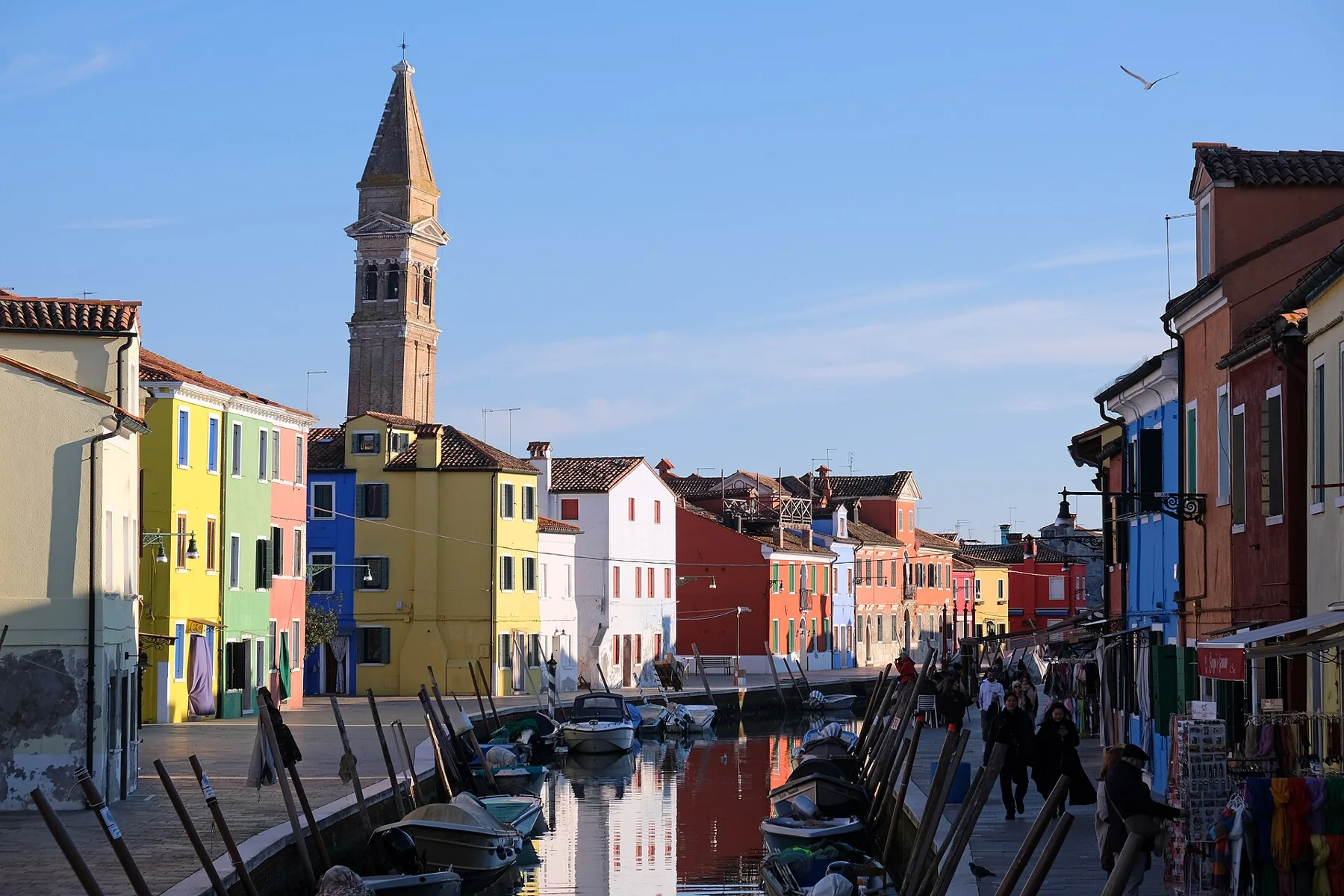
For craft and colour, combine Murano with Burano. For a quieter historical day, pair Burano with Torcello and, from Burano, walk across to Mazzorbo if time allows. Treat Mazzorbo as an optional extension, not another compulsory stop, and pick the island visit you most want before checking connections. Two well-chosen islands usually provide a richer day than a fast sequence of four. Check the current connections and the opening times of the museum or church you most want to enter, and keep a comfortable return margin.
Look at both the outbound and return timetable before leaving. A late connection can change the whole day, so leave room for weather and queues, especially before a fixed booking or a mainland departure. If wind or service disruption affects boats, use the city alternative and confirm ticket-change conditions rather than forcing the island day. For returning visitors, giving the lagoon more time and reducing the monumental core can be the better swap.
Adapt the three days to your interests and pace
Art lovers can replace the island day with San Rocco, the Frari and another museum. Families might prefer the Lido and a simpler boat outing. Returning visitors can give the lagoon more time and reduce the monumental core. For a slower trip, keep the same structure but remove one stop from each day; time for meals, weather changes and small discoveries is part of a successful itinerary, not a failure of planning.
Check the opening days of your preferred museums before fixing the order. A museum closure is a reason to swap days, not to rush two visits together. Compare your priority visits in our tickets section, then arrange the rest of the day around the confirmed booking times. Use our neighbourhood comparison to choose a base and our transport guide to understand connections. The route is an editorial suggestion, not a timed tour: adapt it to your arrival, pace and access needs.
Transport and practical order: match tickets to the journeys you will make
Venice is best understood as two overlapping networks: pedestrian streets and water routes. Vaporetti are public waterbuses, not sightseeing cruises. At the landing stage, check the operator name, line number, direction and departure platform; large stops can share a name across several platforms. Buy the appropriate ticket and follow ACTV’s current validation or activation instructions at the start of each journey and when changing services as required. Compare a pass with the journeys you actually expect to make: several days spent mainly walking may not justify the same product as a stay on Giudecca or a full island day.
ACTV describes its two-, three- and seven-day products as 48, 72 and 168 hours from first validation. Its published conditions exclude Alilaguna and certain waterbus routes, and ordinary multi-day coverage does not automatically include Marco Polo airport travel. Check the exact product and any supplement before purchasing, and use the official fare page rather than relying on old prices. Keep a gondola ride and a traghetto crossing distinct from public transport: a traghetto is a short crossing at an operating point on the Grand Canal, not a full canal tour. Confirm any private water-taxi fare, luggage arrangements and destination landing before departure.
Keep exploring
Sources and photo credits
Independent travel editorial, drafted with AI assistance using our existing guides. Check changing practical information with official operators.
- Three days in Venice — a thoughtful itinerary — Visit Venezia · 2026-11-08
- Photo: kallerna · Source · CC BY-SA 4.0. Responsive image display.
