Venice Journal · 2026-11-06
Two Days in Venice: A Thoughtful Itinerary for Icons and Neighbourhoods
Two days in Venice reward a deliberate split: one day for the monumental heart around St Mark's Square and Rialto, another for art, neighbourhood streets or a lagoon island. This itinerary keeps one timed visit per half day, uses walking and waterbuses together, and leaves room for the unplanned corners that make the city memorable.
How to shape two days without overfilling them
The supplied two-day guide sets a flexible pace with one main timed visit per half day, and its walking estimates exclude queues and time inside the sights. That is the single most useful rule for planning here. Pick the visit you would most regret missing, secure it, then build the surrounding hours around it rather than stacking bookings back to back.
Day one stays in the monumental city and moves west towards Rialto and San Polo. Day two begins in Dorsoduro, around the Accademia, the Salute and the Zattere, and then branches: either a later neighbourhood such as Cannaregio or Castello, or a substantial island day replacing most of that second day. You do not need to do both branches. Confirm changing arrangements with the relevant operator before travelling.
Day 1 morning: St Mark's Square and one anchor visit
Start at St Mark's Square and explore the square itself before entering anything. Then visit either the basilica or the Doge's Palace at your reserved time. If both are priorities for you, the guide's advice is to place them in separate parts of the day with a real break between them, not to rush from one to the other.
Walk along the waterfront afterwards for views of San Giorgio Maggiore and the Bridge of Sighs. This is not filler between tickets: it gives the buildings you have just entered a wider urban context and shows how the city meets the lagoon. Keep an eye on the clock, because the walk can easily absorb more time than expected.
Day 1 afternoon: Rialto, San Polo and the Frari choice
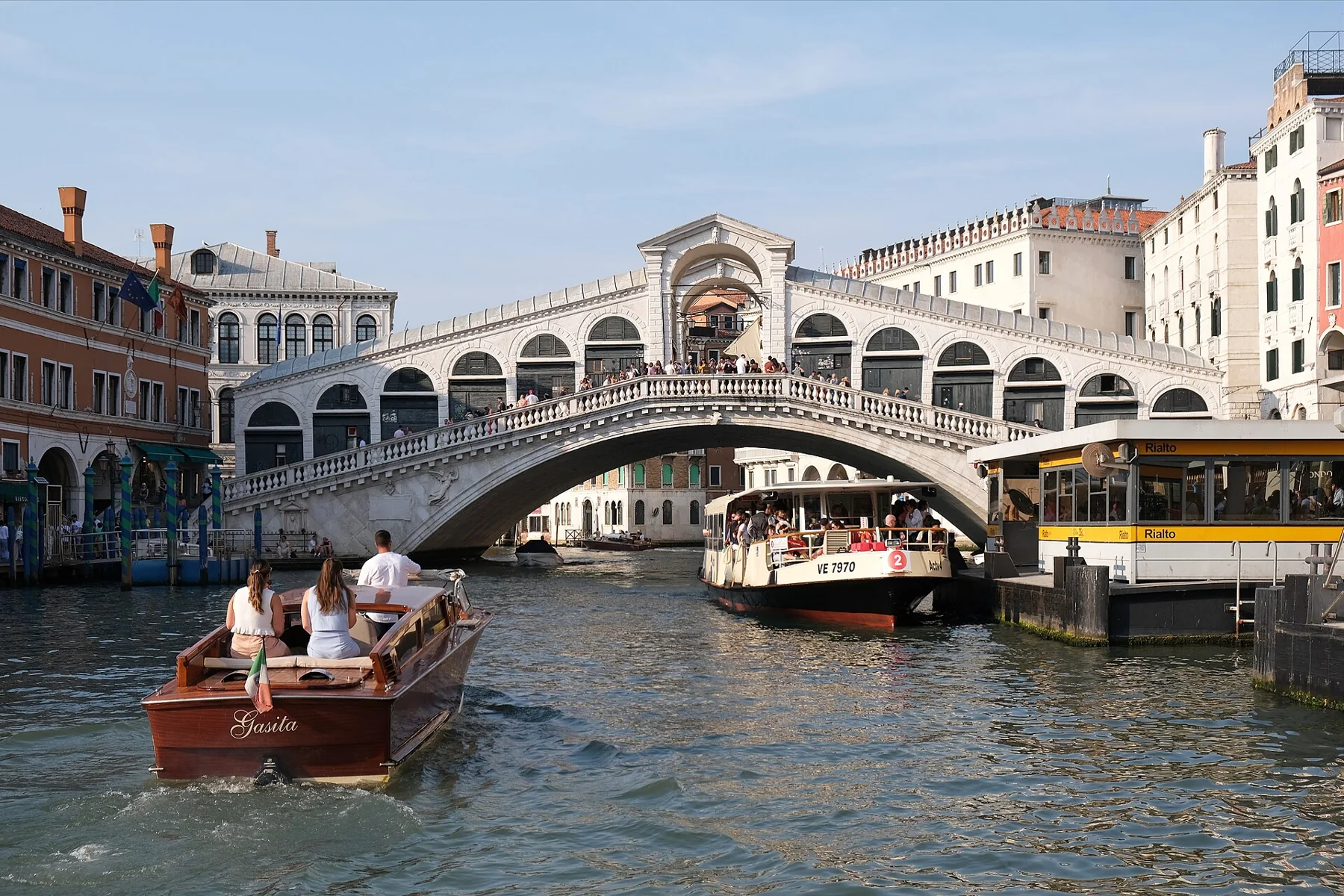
Continue towards Rialto, cross into San Polo and explore the lanes around the market district. Lunch or a cicchetti stop fits here according to the time you have. A Grand Canal journey can then bring you towards your accommodation while offering a different view of the city from the water.
If you still have energy for art, add the Frari; otherwise let the afternoon remain outdoors. The route from St Mark's Square through Rialto to the Frari area is the day-one link in the guide's maps. Use the maps to locate the stops, then adapt the order to your accommodation and confirmed bookings. These are walking directions, not verified step-free routes.
Day 2 morning: Dorsoduro, a museum and the Zattere
Choose the Accademia for historic Venetian painting or the Guggenheim for modern art, then continue towards the Salute and the waterfront, finishing along the Zattere. The guide calls this a deliberately compact route: one museum plus the surrounding district is enough for a rewarding morning. Avoid adding another timed booking simply because it is nearby.
The Peggy Guggenheim Collection has its own official visitor information, and the conditions of any ticket you select should be read before you assign it to this morning. Check what each ticket actually includes: admission, a guided visit and a special route are different products. A bundle is useful only when you want and can schedule its included visits.
Day 2 afternoon: Cannaregio, Castello or an island
For canal-side streets and Jewish history, head to Cannaregio and arrange a Ghetto visit if it interests you. For maritime history and more open eastern spaces, choose Castello instead. Finish with an unhurried dinner or a walk in the area where you are staying; a second evening on foot teaches you the city better than a final rushed attraction.
If the lagoon is a priority, replace most of day two with Murano or Burano and one sensible companion. Do not bolt a distant island onto the end of an already full museum day, and check the outbound and return timetables before leaving, since a late connection can change the whole day. Check the weather and attraction closures before choosing the order, and keep one flexible block.
Walking, waterbuses and adapting the plan
Expect narrow lanes, stepped bridges and routes that turn inland when a canal blocks the way; there is no continuous walkway along the Grand Canal. Signs towards Rialto, San Marco, Ferrovia and Piazzale Roma help with broad direction, but a precise address still needs a map. Allow more time than a distance estimate suggests, and leave bridges clear for people carrying goods or travelling to work. For limited walking or wheelchair access, use the dedicated accessibility planning guide rather than assuming any route is step-free.
On the water, vaporetti are public waterbuses: check the route number, direction and stopping pattern at the landing stage, and validate your ticket according to ACTV's current instructions at the start of each journey and when changing services as required. Compare a pass with the journeys you actually expect to make, and read exclusions carefully, because airport travel, Alilaguna services and certain routes are not automatically included in ordinary ACTV products. In rain, move your chosen indoor visit into the wetter part of the day and shorten the outdoor section.
Keep exploring
Sources and photo credits
Independent travel editorial, drafted with AI assistance using our existing guides. Check changing practical information with official operators.
- Two days in Venice — a thoughtful itinerary — Visit Venezia · 2026-11-06
- Photo: kallerna · Source · CC BY-SA 4.0. Responsive image display.
