Venice Journal · 2026-10-31
Teatro La Fenice: choosing a visit and walking San Marco
La Fenice is a theatre shaped by rebuilding as much as by music. This itinerary helps you choose between a daytime look at the auditorium and boxes or an evening performance, then continues through the lanes of San Marco towards Campo Santo Stefano, the Accademia Bridge or the Scala Contarini del Bovolo, with walking and boat planning kept realistic.
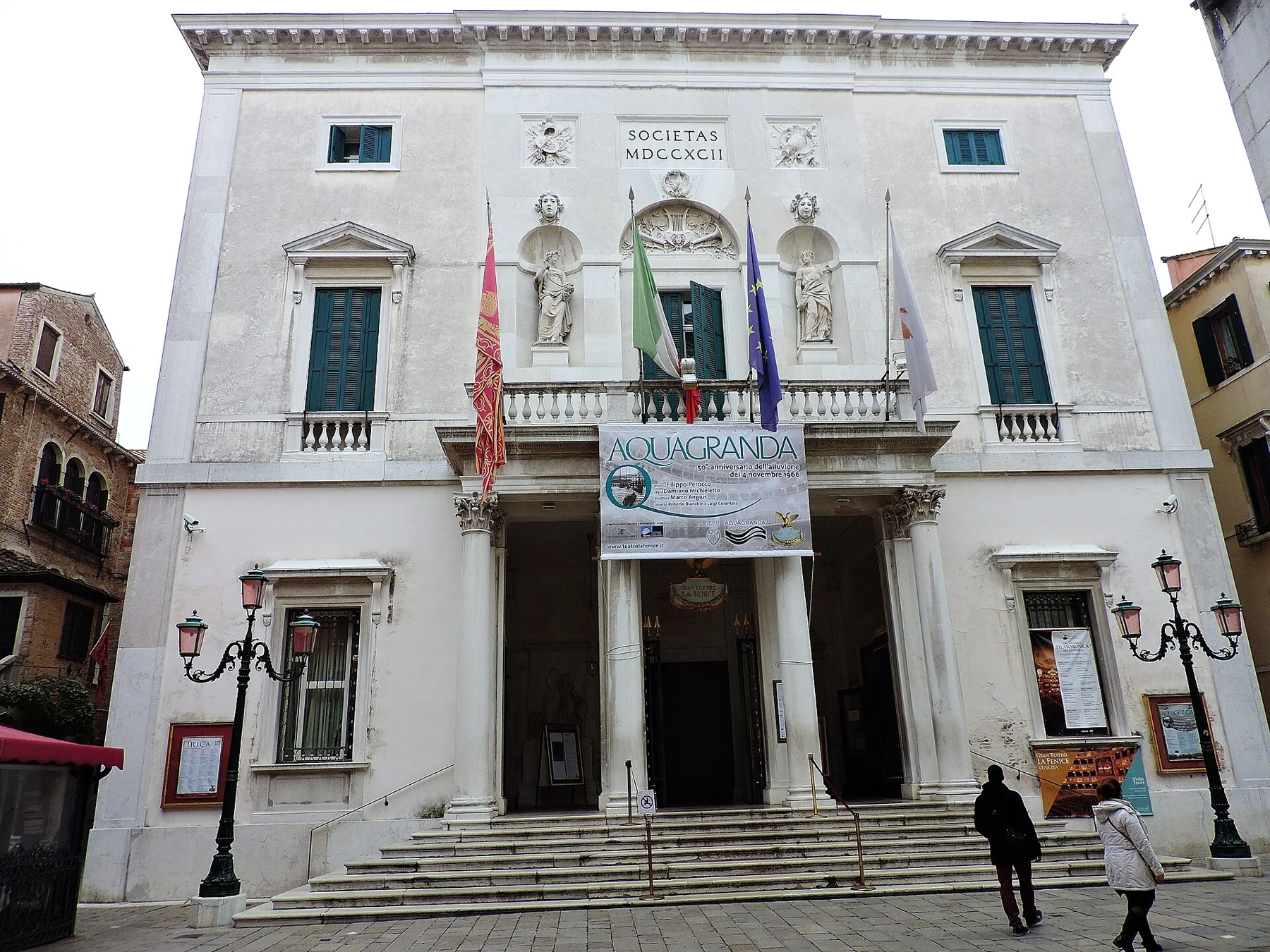
Start with the right ticket for the right experience
La Fenice offers two quite different ways in: a daytime visit and a performance. They are separate products, and our theatre guide notes that tours and performances have separate tickets. Decide which one matters most before you build the rest of the day around it, because the shape of the visit changes completely: a daytime stop is short and architectural, while an evening is organised around a published running time and a return route.
For a performance, check the programme carefully rather than assuming every event happens in the main opera house. According to the theatre's official website, La Fenice also presents events at other venues, and visibility differs between seating positions, so read any restricted-view notes before buying. Book through the theatre's official channels or the operator linked from them, and confirm arrival time, cloakroom arrangements and any dress guidance relevant to the event. Check changing arrangements with the operator before travelling.
What a daytime visit asks you to notice
Allow around an hour for a focused daytime visit, with extra time if you enjoy detailed interpretation. The point is not to rush the ceremonial rooms but to read them as a whole: the relationship between auditorium, boxes and the spaces designed for audiences as well as music. Seeing and being seen was part of the social experience, and the layout makes that legible.
The theatre's official website describes a history of return: fires repeatedly interrupted its story, including the devastating fire of 1996, and the reconstructed interior reconnects today's performances with a celebrated operatic past. Daytime access can change around rehearsals and events, so consult the theatre's actual visiting calendar rather than relying on general opening hours. Treat any suggested duration as a planning estimate, not a schedule.
Cross Campo San Fantin into the quieter lanes
The theatre stands in Campo San Fantin, within San Marco. Step out and resist heading straight for the main square; the streets immediately around the theatre are a good counterpoint to it, and they reward a slower pace. Save the exact theatre entrance in your map before you leave the building, and leave a navigation buffer, because a short walk on a map can still involve an unexpected turn beside a canal.
Walking in Venice means narrow lanes, stepped bridges and routes that turn inland when a canal blocks the way. There is no continuous walkway along the Grand Canal, and signs towards Rialto, San Marco, Ferrovia and Piazzale Roma help with broad direction while a precise address still needs a map. Keep to one side in narrow streets, move aside before stopping, and leave bridges clear for people carrying goods or travelling to work.
A route order that works on foot
From Campo San Fantin, walk to Campo Santo Stefano and use its open space as a pause between the theatre and the water. From there, continue towards the Accademia Bridge if you want a crossing and a view back along the Grand Canal; the bridge is a natural end point rather than a through-route, so decide whether you are crossing or turning back before you commit. Allow more time than a distance estimate suggests, since crowds, photographs and small navigation errors are normal.
An alternative is a detour to the Scala Contarini del Bovolo, a spiral hidden in the city, which suits anyone who prefers lanes and staircases to the main square. Choose one branch rather than trying to combine both comfortably: the theatre, Santo Stefano and one further stop make a coherent half-day, while squeezing in everything turns the walk into a transfer. Either way, the quieter streets nearby are the point, not an obstacle between sights.
Getting there and planning the return
La Fenice sits in the pedestrian network of San Marco, so arrival is on foot or by waterbus to a nearby landing stage followed by lanes and stepped bridges. A route that looks short can include several stepped bridges, so for mobility needs plan with the official accessible routes and transport information rather than assuming a continuous level walk. Our accessibility guide explains what to verify before committing to a route.
If you are combining the theatre with a wider day, compare a vaporetto pass with the journeys you actually expect to make. Several days spent mainly walking may not justify the same product as a full island day, and airport travel, Alilaguna services and certain routes are not automatically included in ordinary ACTV products. For an evening performance, plan dinner and the return route around the published running time rather than guessing when it will end, and check the return timetable if your journey involves a boat.
A performance ticket and a sightseeing ticket remain different products, and a private water taxi or gondola ride is not an ACTV waterbus journey. Count ticket-validity periods rather than every boarding, since a change made within a valid ticket's conditions does not necessarily require another ticket. Prices and ticket structures can change, so use the official fare pages before buying rather than relying on figures quoted in planning guides.
Before you set out, read the operator name, line number, direction and departure platform at the landing stage; at larger stops, several platforms can share a stop name. Compare the destination list with the stop you need rather than following a queue because it is long. Keep proof of purchase and an active ticket available during the journey, and follow the validation or activation instructions for the exact product you bought.
Keep exploring
Sources and photo credits
Independent travel editorial, drafted with AI assistance using our existing guides. Check changing practical information with official operators.
- Teatro La Fenice — a thoughtful itinerary — Visit Venezia · 2026-10-19
- Photo: Dimitris Kamaras from Athens, Greece · Source · CC BY 2.0. Responsive image display.
