Venice Journal · 2026-10-29
Ca’ d’Oro and a Slower Cannaregio Day: Planning Around the Restoration
Ca’ d’Oro is a palace that asks to be looked at slowly. Its façade faces the water rather than a street, and the museum inside is closed for restoration, so this day is built around canal views, quieter Cannaregio lanes and a deliberate, unhurried walk.
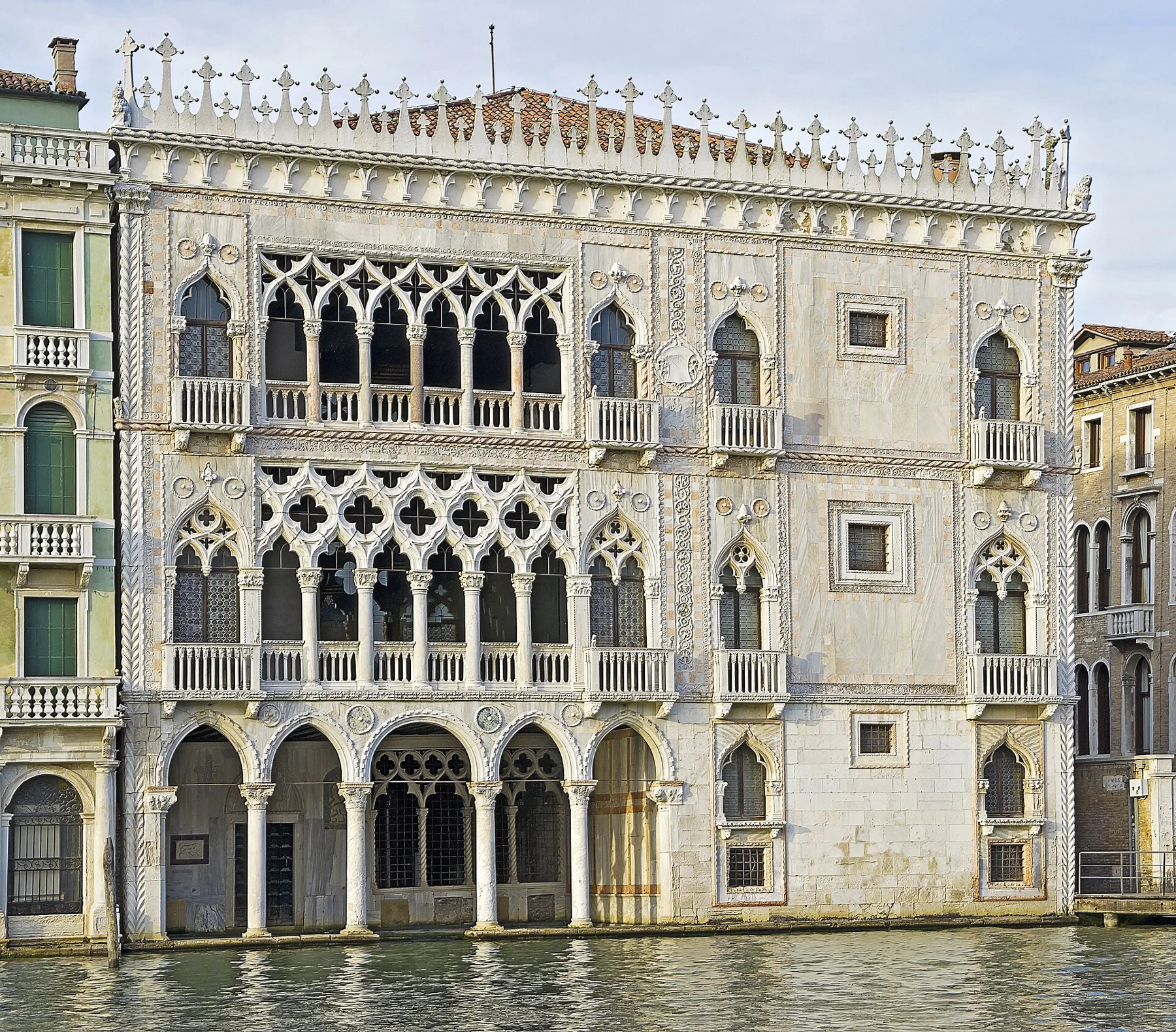
Start with the view from the water
Begin with the Grand Canal, because that is where the palace was designed to be seen. A vaporetto passing in front of Ca’ d’Oro gives you a moving view: open loggias set against more solid wall sections, arches and quatrefoils producing patterns that reward a second look. Treat the boat as public transport rather than a photography platform, and let the passing view do the work instead of chasing a single stationary frame.
The crossing also puts the palace in context. Grand Canal palaces present their main faces to the water, and seeing several in succession makes Ca’ d’Oro’s particular lightness clearer than any single encounter. Note where you want to return on foot for a closer external look, then plan the walking part of the day from there rather than assuming the interior is your starting point. Bear in mind that a boat journey shows the façade in passing, so the closer look on foot is the part you control.
Why the inside is not available today
One practical point shapes the whole day: the museum is closed to visitors for restoration work. Our guide, with official status checked on 20 October 2026, states that reopening is currently expected in spring 2027, and it advises checking the museum’s official updates before planning an indoor visit. That means no interior route and no collection visit on this itinerary.
That constraint is not a reason to skip the area. It is a reason to decide honestly whether the façade alone interests you. If it does, build a district walk around it. If your priority is a museum interior, keep Ca’ d’Oro for a later trip and choose a different Cannaregio morning. Historic museums can have conservation work or partial closures, so the operator’s latest notices carry more weight than any planning article, including this one.
What the palace is, in one short paragraph
The official Ca’ d’Oro website, as summarized in our guide, explains the palace as one of the Grand Canal’s most distinctive buildings, with an open tracery and layered façade that give stone an extraordinary lightness; the name, house of gold, recalls the rich surface decoration that once contributed to its appearance. The palace also houses the Galleria Giorgio Franchetti, whose art collection and architectural setting belong together, with the building itself forming a major part of the experience. Check current visitor route and collection access with the official museum.
Beyond that, treat the façade as the subject of the day rather than a backdrop. The name points to a vanished surface layer, so what you see now is architecture read without its onetime colour. Looking across the canal, compare the open upper sections with the heavier lower wall, and notice how the whole composition leans towards the water it faces. This is the kind of looking a slower day allows.
Walking Cannaregio from the palace outward
Ca’ d’Oro sits in Cannaregio, and the district rewards a route that works away from the canal rather than along it. There is no continuous walkway beside the Grand Canal, so expect lanes that turn inland when water blocks the way. Keep one side in narrow streets, move aside before you stop, and leave bridges clear for people carrying goods or travelling to work. Signage towards Rialto, San Marco, Ferrovia and Piazzale Roma gives broad direction, but precise addresses still need a map.
A sensible order is to arrive by water, step off near the palace and walk north and west into the quieter streets before returning towards the canal later. Allow more time than distance suggests; crowds and small navigation errors are normal. If the interior route were available, our guide suggests allowing roughly an hour to ninety minutes. With the museum closed, that time transfers naturally to the district itself, which is the point of a slower day.
Building the rest of the day, and getting it right on transport
Two nearby anchors make the walk purposeful. The Venetian Jewish Ghetto offers a living chapter of Venice’s history, and the canal-side streets of northern Cannaregio suit an unhurried afternoon. Choose one as your main second stop rather than attempting both in detail. For a shorter day, see the palace from the water and devote your walking time to Cannaregio, deciding deliberately between façade and museum rather than treating them as one experience.
On the water, check the route number, direction and stopping pattern at the landing stage, since large stops can have several platforms. Compare a pass with the journeys you actually expect to make; several days spent mainly walking may not justify one. For a single day, ACTV’s fare page checked on 9 October 2026 lists the 75-minute Rete Unica ticket at €9.50 and the Venezia Daily Pass at €25 for 24 hours. Airport travel and Alilaguna services are not automatically included in ordinary ACTV products. Check changing arrangements with the operator before travelling.
Keep exploring
Sources and photo credits
Independent travel editorial, drafted with AI assistance using our existing guides. Check changing practical information with official operators.
- Ca’ d’Oro — Visit Venezia · 2026-10-29
- Photo: Didier Descouens · Source · CC BY-SA 4.0. Responsive image display.
