Venice Journal · 2026-10-23
Scuola Grande di San Rocco: A Slow-Looking Guide in San Polo
San Rocco rewards a slower pace than most Venice stops. The confraternity building in San Polo wraps visitors in paintings that cover walls and ceilings, so the useful question is not how quickly to see everything but how to arrange a morning or afternoon around looking properly. This guide sets out a route, the neighbourhood around it and the transport decisions that make the visit fit a wider day.
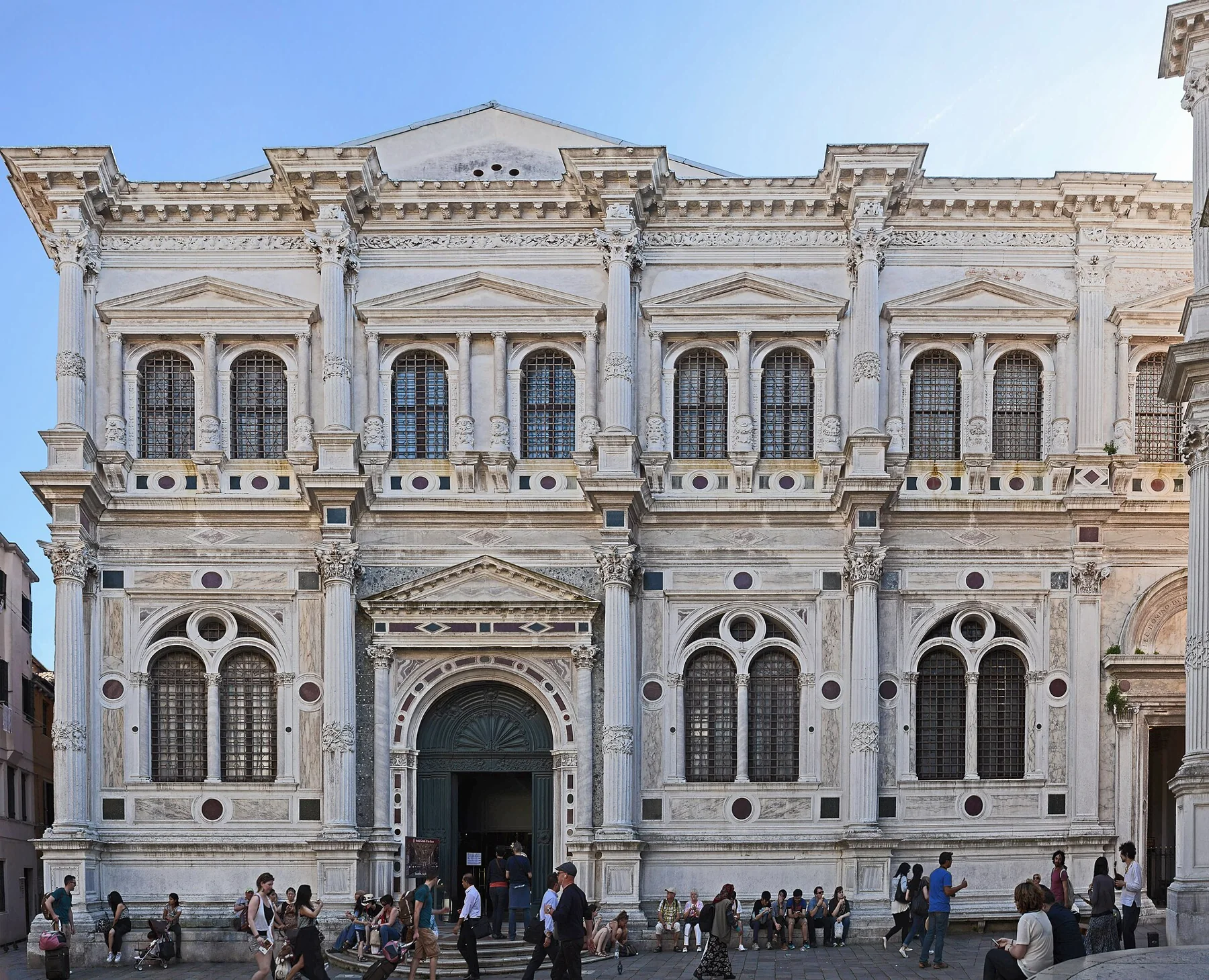
What a scuola was, and why it shapes the visit
In Venice, a scuola was a lay confraternity with religious, charitable and social responsibilities, and its building's decoration expressed the community's identity and beliefs. Knowing this changes how the rooms read: the paintings were not assembled as a neutral gallery collection but belong to a place where members met and carried out their activities. San Rocco's association with charity and protection during disease gives the setting particular resonance.
That context is the reason to begin with the room rather than the label beside a single picture. Look at how the narrative scenes speak to the spaces they occupy and to the purposes of the confraternity. The visit then becomes a sequence of rooms with a social history, not a checklist of individual masterpieces to tick off before moving on.
How to look at the paintings
Start by taking in each room as a whole. Notice the direction of light within the paintings, the dramatic movement of figures and the way compositions respond to their position above or beside you. Only then choose a few works for closer attention. The cycle as a whole deserves time; fixing on one famous scene too early can flatten the experience of scale and atmosphere.
Ceiling paintings mean looking up, and neck strain is real. Take breaks, sit where the venue allows and use any viewing aids provided. Our guide names the Crucifixion as a major highlight, but we deliberately keep the emphasis on the wider cycle. Avoid trying to identify every scene before you have absorbed the rooms; understanding can follow looking.
A focused visit and what the official website covers
Allow around an hour to ninety minutes as a practical starting point. Check the official opening calendar, the current visitor route and accessibility information with the operator, since historic rooms and staircases can make the route different from a modern purpose-built museum. Travel lightly and follow the venue's photography rules.
The Scuola Grande di San Rocco's official website is the reference for opening hours and access notices. Note that the Scuola Grande is the confraternity building and is distinct from the neighbouring church of San Rocco. A separate ticket exists for the Da Vinci Interactive Museum in the Scoletta di San Rocco; it does not include general admission to the Scuola Grande galleries or the church, so check what any experience you book actually covers.
Building an art day in San Polo
The Frari is the obvious nearby partner, and together the two give a strong introduction to Venetian painting in its architectural context. They offer different settings and artists, so a break between them helps rather than dilutes the day. Add a walk through San Polo rather than a third demanding museum; the neighbourhood's markets, turnings and small squares are part of the reason to be here.
On a rainy day this pairing is particularly useful, but bring a plan for lunch and a pause. The best art day includes time to absorb what you have seen, and San Polo's lanes make that easy to arrange without leaving the district. If you are visiting with children, choose a handful of visual details to look for rather than expecting them to follow the full iconographic programme.
Getting there and pacing the day
Venice works as two overlapping networks: pedestrian streets and water routes. Expect narrow lanes, stepped bridges and routes that turn inland when a canal blocks the way, and allow more time than a distance estimate suggests. Signs towards Rialto, San Marco, Ferrovia and Piazzale Roma help with broad direction, but a precise address still needs a map. Keep to one side in narrow streets and leave bridges clear.
If you use a vaporetto, check the route number, direction and stopping pattern at the landing stage, as large stops can have several platforms. Validate your ticket according to ACTV's current instructions at the start of each journey and when changing services as required. ACTV's fare page checked on 9 October 2026 lists the standard 75-minute Rete Unica ticket at €9.50 and the Venezia Daily Pass at €25 for 24 hours; recheck eligibility and live prices before buying.
For mobility needs, plan with the official accessible routes and transport information, because a route that looks short can include several stepped bridges. Our accessibility guide explains what to verify before committing to it. Arriving on foot from the San Polo lanes keeps the day flexible, and leaving a return option open avoids tying the visit to a single boat.
Keep exploring
Sources and photo credits
Independent travel editorial, drafted with AI assistance using our existing guides. Check changing practical information with official operators.
- Scuola Grande di San Rocco — Visit Venezia · 2026-10-23
- Photo: Didier Descouens · Source · CC BY-SA 4.0. Responsive image display.
