Venice Journal · 2026-10-20
Rialto Bridge: Crossing, Views and the Market Side
Rialto is both a landmark and a working connection between two busy sides of Venice. The stone bridge spans the Grand Canal beside the historic market area, and its best moments often come when you stop treating it only as a viewpoint. This guide sets out a short route that takes in the crossing, the canal edges and the streets that depend on the bridge.
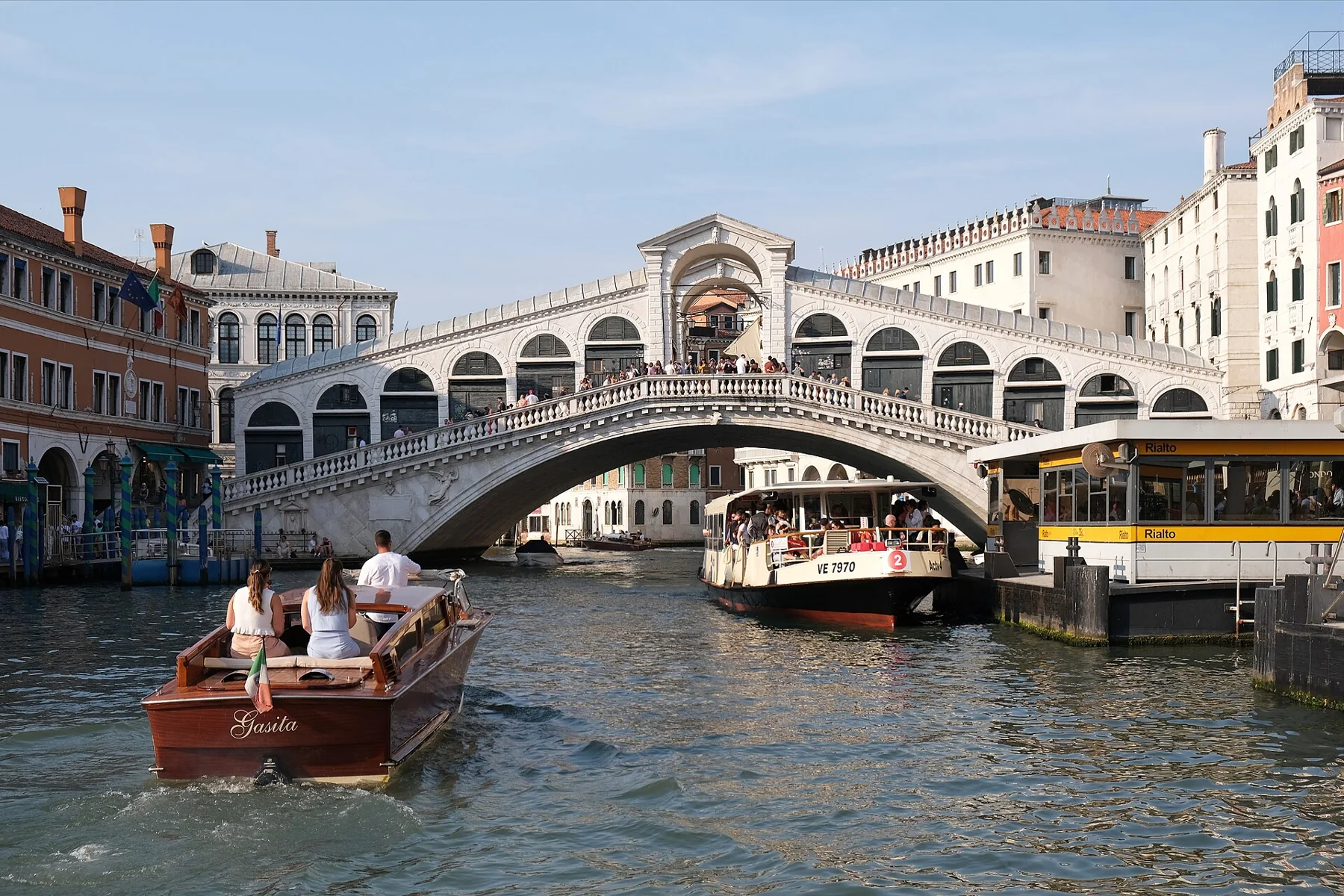
A bridge at the centre of trade
The present stone bridge belongs to the late sixteenth century and replaced earlier crossings. Its broad arch and rows of shops make it immediately recognisable, and it links San Marco with San Polo, close to a district long associated with commerce. That commercial identity is not a museum label: the bridge still functions as a through-route for residents, deliveries and people changing sides of the canal.
Cross it once for the experience, then step off and look back from the canal edge to understand the structure. Boats and waterbuses pass beneath it throughout the day, which is the clearest reminder that the Grand Canal is a transport route as well as a celebrated view. Reading the bridge from the bank takes only a few minutes and changes how the crossing feels when you make it.
Finding a better way to photograph it
The bridge can become congested, particularly in the middle of the day. Take photographs without stopping in the centre of a moving crowd or blocking the steps; a few metres to one side is usually enough. The canal-side spaces on either bank offer alternatives, though their light and access differ, so it is worth checking both directions before settling on a spot.
Early morning can be useful if you also want to see market activity on the San Polo side. In the evening, the scene becomes more about illuminated façades and reflections on the water. No viewpoint is guaranteed to be empty, so patience serves better than a rigid shot list. If you are meeting someone here, name a precise location rather than simply the bridge.
Where the crossing fits in a walking day
Venice is two overlapping networks: pedestrian streets and water routes. Walking reveals the city's detail, but expect narrow lanes, stepped bridges and routes that turn inland when a canal blocks the way. There is no continuous walkway along the Grand Canal, so Rialto works best as a deliberate stop on a route rather than a point you pass by accident. Signage towards Rialto, San Marco, Ferrovia and Piazzale Roma helps with broad direction, but a precise address still needs a map.
Allow more time than a distance estimate suggests. Crowds, photographs and small navigation errors are normal, and a short-looking link can include several stepped bridges. Keep to one side in narrow streets, move aside before stopping and leave bridges clear for people carrying goods or travelling to work. If Rialto is your meeting point, agree on a specific side of the canal and a named landmark outside the main flow of pedestrians, because the bridge has several levels and two banks.
Exploring the market side in San Polo
On the San Polo side, walk towards the market area and the small streets around San Giacomo di Rialto. Treat the market as a place of work: leave space for shoppers and deliveries, and move aside when you want to pause. If the stalls are a priority, check their operating days with the relevant operator and come in the morning, when the district is busiest with trade rather than tourism.
Continue towards Campo San Polo and the Frari for a route that moves from commerce to art, or pause for cicchetti and let lunch become part of the exploration. The streets behind the market reward slow walking more than a checklist; this is where the bridge's working role becomes visible. A short detour inland also gives you a quieter view back towards the Grand Canal.
Tickets, steps and planning the return
Walking across the bridge does not require an admission ticket. It has steps, so it is not a step-free Grand Canal crossing. Travellers with mobility needs should plan an appropriate waterbus route rather than relying on a pedestrian shortcut, and check current accessible-route information before committing to a plan.
For the waterbus, check the route number, direction and stopping pattern at the landing stage, and validate your ticket according to ACTV's current instructions at the start of each journey and when changing services as required. Compare a pass with the journeys you actually expect to make. Keep bags close in crowded places and confirm changing arrangements with the operator; suggested visit lengths and routes here are planning estimates, not guarantees.
Rialto can be covered in 20–30 minutes, longer with the market.
Keep exploring
Sources and photo credits
Independent travel editorial, drafted with AI assistance using our existing guides. Check changing practical information with official operators.
- Rialto Bridge — Visit Venezia · 2026-10-20
- Photo: kallerna · Source · CC BY-SA 4.0. Responsive image display.
