Venice Journal · 2026-10-11
A Slower Day on Murano: Glass, Canals and Island Planning
Murano is reached only by boat, and that single fact should shape the day. The island's workshops, showrooms and Glass Museum explain a craft tradition, but between those visits lie quiet canals, working boat traffic and the church of Santi Maria e Donato. This guide builds a realistic half-day that leaves room for looking rather than rushing.
Understand the glassmaking tradition first
Murano's identity is inseparable from glass. A furnace demonstration can show the speed and skill of working hot glass, yet it is only one part of a longer craft process. Some demonstrations sit inside commercial showrooms; others are arranged directly with workshops. Before joining one, ask what is included, whether there is an admission charge and whether a purchase is expected.
If historical context matters to you, make time for the Glass Museum. Its collections help explain how techniques and tastes changed over time. Because the museum is sometimes the main reason people cross to the island, check its official calendar before setting out rather than assuming it will be open when you arrive.
Walk the island, not just the shopfronts
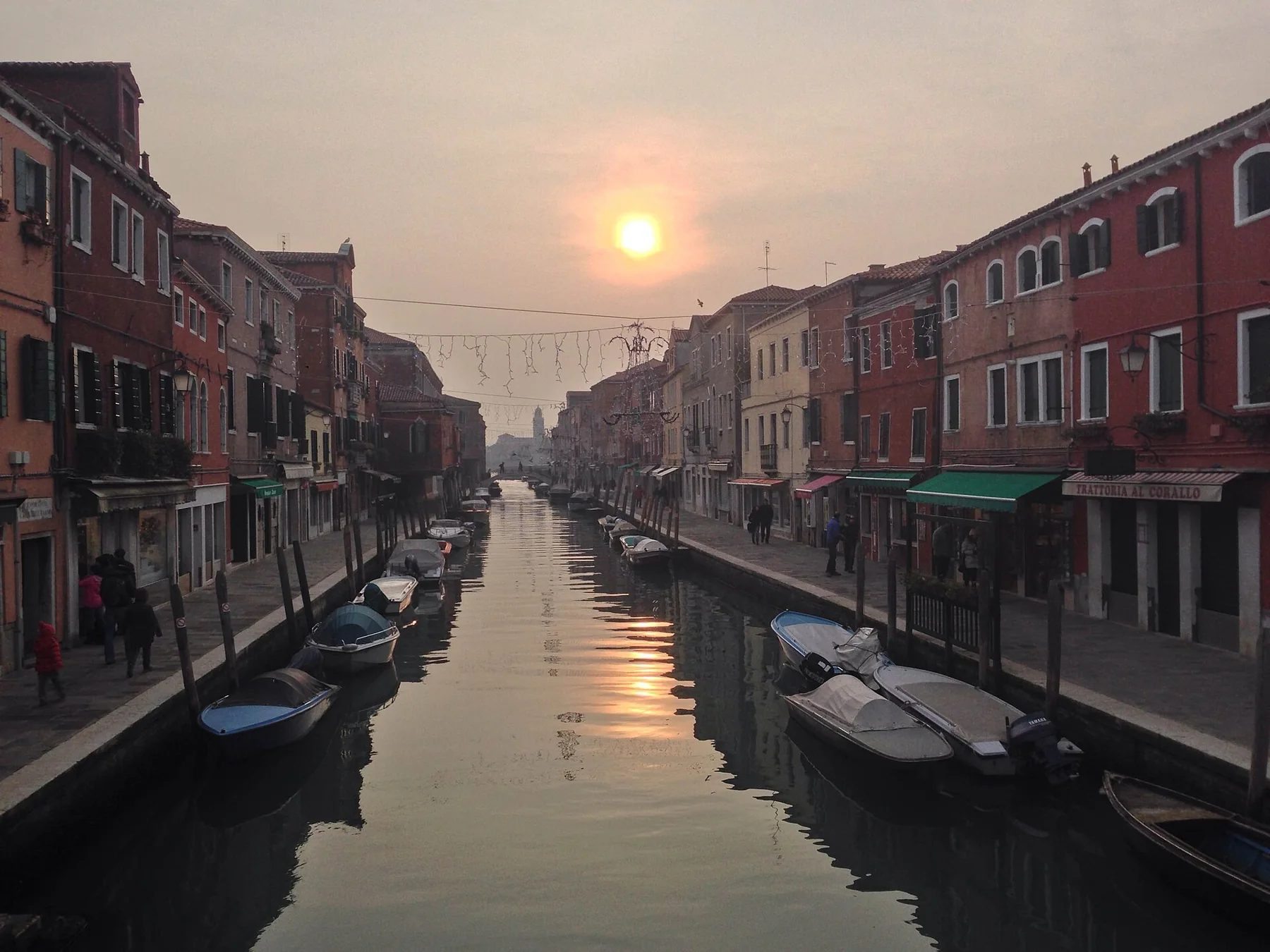
Leave the boat stop and follow the canals rather than moving straight from landing stage to showroom. Crossing the bridges on foot is how the island's everyday scale becomes visible: delivery boats, homes and working spaces share the same setting as the visitor economy.
The area around the church of Santi Maria e Donato shows a different kind of craftsmanship, in its architecture and mosaic floor. Visiting access follows the church's own arrangements, so treat any opening information as something to confirm on site or through the church itself.
Respect closed workshop doors, and ask before photographing artisans at work. The island is a working place as well as a destination.
Buying glass thoughtfully
If you consider a purchase, ask where a piece was made, who made it and how the seller documents its origin. A label saying “Venetian style” is not the same as a clear statement of Murano production. For an expensive piece, request a written description, dimensions, shipping terms and insurance details.
Do not feel obliged to buy after a demonstration. A good visit can be entirely about looking and learning. If you do purchase, compare objects for their craftsmanship and your own taste rather than only for size or elaborate packaging.
Planning the boat journey
Murano has several waterbus stops, so choose the one that matches your first destination and check the live ACTV route from your starting point in Venice. Vaporetti are public waterbuses: confirm the route number, direction and stopping pattern at the landing stage, and validate your ticket according to ACTV's current instructions.
There is no walking route from Venice to Murano, so plan both the outbound and the return service. A late connection can reshape the whole day.
A half-day versus a full lagoon day
For a relaxed half day, combine one glass-focused visit, a canal walk and lunch. For a full lagoon day, choose a small number of stops. Continuing to Burano means allowing time for the transfer and for a final return sailing that leaves a comfortable margin; adding Torcello as well can work, but turns a slow island visit into a more transport-heavy itinerary.
Food fits naturally into either shape. Cicchetti are small bites that vary by venue and season; a bàcaro stop can be a light meal or a pause between walks. Baccalà mantecato is a whipped stockfish preparation often served on bread or polenta, and sarde in saor combines sardines with a sweet-sour onion preparation. Recipes and availability vary, so ask what has just been made and check how ordering and seating work at the venue you choose.
For allergies or dietary requirements, speak directly with the venue about ingredients and preparation rather than relying on a dish name alone.
Costs, tickets and what to confirm
Transport prices and ticket structures can change. ACTV's fare page checked on 9 October 2026 lists the standard 75-minute Rete Unica ticket at €9.50 and the Venezia Daily Pass at €25 for 24 hours. Three separate 75-minute tickets would cost €28.50, so if your covered journeys require three separate tickets within 24 hours, the daily product costs €3.50 less at those published rates.
Count ticket-validity periods rather than every boarding: a change made within a valid ticket's conditions does not necessarily require another ticket. That example excludes airport travel, supplements and concessions. Airport travel, Alilaguna services and certain routes are not automatically included in ordinary ACTV products, so read exclusions and recheck live prices before buying.
For mobility needs, plan with the official accessible routes and transport information. A route that looks short can include several stepped bridges, and general suggestions here are not a guarantee of step-free access. Check current opening times, prices, access and service notices with the relevant operator before travelling. Suggested visit lengths and routes are planning estimates.
Keep exploring
Sources and photo credits
Independent travel editorial, drafted with AI assistance using our existing guides. Check changing practical information with official operators.
- Murano — Visit Venezia · 2026-10-11
- Photo: Wittylama · Source · CC BY-SA 4.0. Responsive image display.
